The Moon Hoax, One More Evidence

by Iris

The Number One tell-all sign why the Soviets knew straightaway that the Apollo missions were a hoax, as soon as they “landed”:

Initially, the Soviets did not fully appreciate the effect of weightlessness and wrongly assumed that it would enhance the health of their astronauts.

The first short-term flights inspired optimism, but after the 5-day long 1969 Soyuz-7 flight, the returning crew had to be removed on stretchers, and their arrival so distressing that it had to be hid from the public.

On the longer lasting, 18-day long Soyuz-9 flight of June 1970, the astronauts arrived in state of pre-heart infarction and had to be urgently taken to intensive care for ressucitation. The Soviets realised that weightlessness was actually a killer.

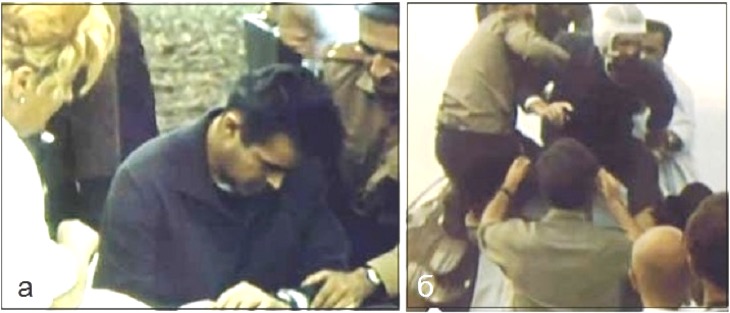
That’s an archive photo of Soyuz-9 astronauts Nikolaev and Sevastyanov being carried like motionless dolls out of the return module.

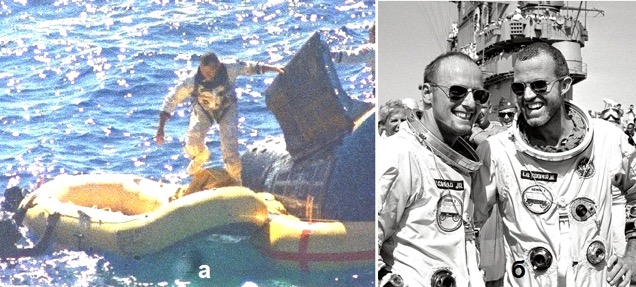
NASA obviously did not know this, since it had never even sent astronauts to orbit around the Earth. So it pictured, on its fake return missions, dashing, fresh and energetic astronauts jumping from craft to ship. This is a photo of the 1965 Gemini-5 crew, after they had just landed in the ocean and were about to jump (literally) into the aircraft carrier collecting them.

So unless the Apollo astronauts were some kind of bionic super-beings with synthetic muscles, they clearly had not been exposed to the major impacts of weightlessness experienced by all of the Soviets, the longer the stay, the more terrible the effects.

Nowadays, the effect of weightlessness are very carefully fought and monitored. The ISS astronauts have to undergo a daily workout plan lasting 2 hours, to prevent bones and muscle loss.

Was Navalny’s Wife the Killer?

From MOSCOWEXILE

Found it on one forum:

On February 14, Navalny’s wife visited him in the penal colony and gave him gifts and medicines, then urgently flew to Moscow, in the morning to Istanbul and Munich. THINK AHEAD.

And this is what the inconsolable widow looks like:

Having never been a partisan of either Navalny or Putin, I can, however, without any hesitation state that it is precisely the Putin regime that this death of Navalny does not benefit in any way.

And about [the statement that]“Lenin planted a bomb”*, whoever made the decision to allow Navalny back into Russia and then have him imprisoned planted a “bomb” that was to be detonated at the behest of “our Western partners”, which happened at the most inopportune moment for the Kremlin authorities.

THINK!

*16:27 21 January 2016

Putin tells scientists about Lenin’s subversive role in Russian history

“They put an atomic bomb under the building called Russia, and then it exploded”, the president said.

Moscow. January 21st. INTERFAX.ENVladimir Putin spoke sharply about the results of the activities and ideas of the leader of the revolution, Vladimir Lenin, which, according to the president, led to the destruction of historical Russia.

Thus, he responded to the head of the Kurchatov Institute Mikhail Kovalchuk, who at a meeting of the Presidential Council for Science and Education quoted Boris Pasternak’s poem “High Sickness”, in which he analyzes the October Revolution and says about Lenin: “And so, when I saw him in reality, I thought, thought endlessly about his authorship and his right to dare in the first person”.

“The answer is this: he directed the flow of thought and only because of that — the country”, Kovalchuk continued, suggesting that in the scientific environment “we should find organisations that should direct the flow of thought in specific directions”.

“Controlling the flow of thought is the right thing to do, as long as this thought leads to the right results, and not like Vladimir Ilyich [Lenin]. And then in the end, this idea led to the collapse of the Soviet Union, that’s what. There were a lot of thoughts like this: autonomization and so on. They put an atomic bomb under the building called Russia, and then it exploded. And we didn’t need a world revolution. That’s the idea there”, Putin said, concluding a meeting of the presidential council.

Here is the original in Russian: https://godilla.livejournal.com/612811.html

Нашел на одном форуме:

14 февраля жена Навального приезжала к нему в колонию и передала подарки и лекарства, потом срочно улетела в Москву, утром в Стамбул и в Мюнхен. ДУМАЙТЕ. 

А вот так выглядит “безутешная вдова”

Не будучи ни разу симптизантом ни Навального, ни Путина, могу, однако, ничтоже сумняшеся заявить, что именно путинскому режиму эта смерть Навального никак не выгодна. 

И про “Ленин бонбу заложил”. Тот, кто принял в свое время решение впустить в РФ Навального, а затем его посадить, именно что “бонбу заложил”, которая должна была рвануть по отмашке “наших западных партнеров”. Что и случилось в самый для кремлевской власти неподходящий момент. ДУМАЙТЕ!

Maidan was a Big Staged Hollywood-Style Festival

“It [Maidan] was a big festival created for the western population”

Janus Putkonen, Finnish geopolitical analyst and investigative journalist with the Patriotic Network who worked in Kiev in April 2014, debunks the pretty picture of a ‘popular uprising’ staged for the Western public

“It was created as a show to make it look like a popular uprising. And in order to to do that, they really used ordinary people,” he added.


Death of Aleksei Navalny: The Brits Did It!

by Gilbert Doctorow

Death of Aleksei Navalny: the Brits did it!

It is remarkable how an invitation to do a live television interview can change your schedule and concentrate your mind.

This afternoon I got a WhatsApp message from TRT, Turkey’s premier English language international broadcaster with whom I had done several interviews a year ago, followed by many months of silence. That is not unusual. Broadcasters rotate experts in and rotate experts out at their pleasure.

The invitation today was to speak about breaking news, the reported death in a remote Yamalo-Nenets prison colony of Russian opposition leader Aleksei Navalny at age 47. A glance at the latest online edition of The Financial Times confirmed that Navalny had indeed died and set out the comments of leading Western statesmen condemning what they considered to be the latest murder by Vladimir Putin of prominent activists who oppose his rule. U.S. Secretary of State Antony Blinken, European Council President Charles Michel and German Chancellor Olaf Scholz were among those who already had spoken before microphones and were reading from the same anti-Putin script.

In short, what happened in the West this afternoon was a new campaign to vilify Vladimir Putin on the world stage based on a death which was, if I may quote former British PM Theresa May, ‘highly likely’ to have been perpetrated by British Intelligence for this very purpose.

In all of the false flag operations that have been directed by the West against Russia over the past decade or more, I have argued that the old Roman investigative principle of cui bono militated against the Kremlin having been involved in any way. So it is today: why would Putin want to murder Navalny, when the man is now largely forgotten within Russia. Navalny is yesterday’s news and his ‘anti-corruption’ campaign is irrelevant to Russians in the midst of an existential struggle with the Collective West that is being fought on the territory of Ukraine? However, the murder of Navalny clearly serves the interests of that same Collective West as an intended antidote to the major Soft Power coup of the Carlson Tucker interview with Vladimir Putin just a week ago and perhaps even more important, to the follow-up Tucker News Briefs showing his visits to the Kievskaya Metro Station and to an Auchan supermarket in downtown Moscow. This was not Gilbert Doctorow publishing his travel notes of visits to St Petersburg markets and reaching 10,000 readers; it was Tucker Carlson, with a regular U.S. audience of 40 million or more for his every broadcast, and a peak of one billion views for the recent interview.

Let us go beyond the cui bono argumentation to circumstantial evidence that is damning for the Brits. As the Americans like to say, there are ‘fingerprints’ of the Brits all over this death of Navalny.

A fair number of the poisonings and other assorted deaths of people who could be said were ‘inconvenient’ to the Kremlin happened in the U.K., after all. That is where Boris Berezovsky, the exiled oligarch who opposed Putin tooth and nail, was ‘suicided’ and it occurred in 2013 at his London estate when it was widely rumored he was looking for forgiveness for his treachery and was preparing to return to Mother Russia with a trove of documents. Earlier still, the U.K. is where the Berezovsky employee Alexander Litvinenko met his death in 2006 from polonium poisoning in a very British cuppa tea.

However, more recently there were incidents in the U.K. which bear directly on the fate of Navalny, and their timing is very relevant. I am thinking about the Novichok poisoning of former Russian spy Alexander Skripal in Salisbury at the start of March 2018, ahead of the 18 March presidential elections in Russia that year, when Putin was making his return to power following the interregnum when Dmitry Medvedev was president.

Hmm. A terrible attack on a Putin enemy in 2018 just weeks before a Russian presidential election. Hmm, again: the date of Putin’s next election happens to be 15-17 March.

The Skripal poisoning was shouted to the skies by the British political establishment. Can you just imagine, they said, that Putin is carrying out revenge murders on British soil! Of course, today, everyone has forgotten about the Skripals, who seem somehow to have survived the Novichok attack which is always fatal and to have been given new identities if they were not simply dumped by MI6 into shallow graves somewhere.

But the Novichok that the Russians were said to have invented also was in production in a chemical weapons facility located not far from Salisbury. Another detail that Western media chose to ignore.

Novichok just happens to be the poison that was allegedly used against Aleksei Navalny back in August 2020 while he was on the stump in provincial Russia working up the population to oppose the oligarchs and crooks who, he said, were running the country. Like the Skripals, Navalny miraculously survived his poisoning by Novichok. He was flown to Germany, where Angela Merkel extended a warm welcome to him and where, during his months long convalescence he oversaw the production by German crews of faked video exposés showing palaces on the Black Sea that were supposedly built for Putin.

Russian doctors at the prison colony were said to have spent half an hour today trying to revive Navalny, but in vain. He is just one more case of collateral damage in the British secret war on Russia

Time was, in the days of Tony Blair, we spoke of the British as the ‘lap dogs’ of Bush. Today it would be more appropriate to say that the British have become the Hound of the Baskervilles, ahead of and likely outside the control of Washington.

When the link to my interview with TRT becomes available, I will post it here.

©Gilbert Doctorow, 2024

Musk Decries US Government Censorship

via RT

Tesla CEO Elon Musk has claimed that his foray into social media – buying the former Twitter (since renamed X) and trying to make it a bastion of free speech – made him and all of his businesses targets for constant attacks by governments and other censorship advocates.

“The public still doesn’t understand even a tiny fraction of the power of the censorship-government-industrial complex,” Musk said on Friday in a post on X. “As predicted, my companies and I came under relentless attack the moment the censorship of this platform was lifted. How far will they go to stop me?”

The US billionaire made the comments in response to a post by podcast host David Sacks, who warned that “regime Democrats” are working every day to undermine Americans’ free-speech rights and freedom from political persecution. Musk also agreed with a suggestion that his political enemies are “just getting started” after winning a Delaware court ruling late last month voiding his $56 billion compensation package at Tesla.

Musk, who heads several other companies, has previously claimed that he’s at “quite significant” risk of being killed. His father, Errol Musk, said in an interview last September that he feared his son could be assassinated by a “shadow government” because of the influence he wields.

Ranking as America’s richest man with a fortune estimated by Forbes at over $200 billion, Elon Musk has been hit with a flurry of legal attacks and negative media coverage since buying Twitter for $44 billion in October 2022 and vowing to end censorship on the platform. Advertiser boycotts cut into X’s revenue, and President Joe Biden’s administration sued Musk’s SpaceX company for allegedly discriminating against refugees in its hiring practices.

Biden reacted to the Twitter takeover by suggesting that Musk should be investigated by the federal government. Asked whether Musk could jeopardize US national security, the president told reporters, “I think that Elon Musk’s cooperation and/or technical relationships with other countries is worthy of being looked at.”

Under its previous ownership, Twitter was among the social media platforms that helped Biden win the 2020 US presidential election by censoring a bombshell report on alleged influence-peddling in Ukraine and China by his family. Republican lawmakers have accused the FBI of colluding with Twitter executives to squash the report.

Musk also released internal Twitter documents exposing government involvement in the censoring of speech regarding the Covid-19 pandemic. “Thank God for Elon Musk for allowing to show us and the world that Twitter was basically a subsidiary of the FBI, censoring real medical voices with real expertise that put real American lives in danger because they didn’t have that information,” US Representative Nancy Mace said last year.

Israel’s UK Establishment Takeover Exposed…

Israel’s UK Establishment Takeover Exposed…

The Curse Of Ultra-Pasteurization

Authored by Sally Fallon Morell via The Epoch Times (emphasis ours),

In the summer of 1983, an outbreak of listeriosis occurred in Massachusetts. Forty-nine people became sick and 14 of those—29 percent—died. Listeria is the bad actor among pathogens. Most pathogens make people sick but don’t kill them—listeria, on the other hand, often kills, especially the very young, the elderly, and the immune-compromised.

(Andrey Burstein/Shutterstock)

Listeria most commonly occurs in deli meats, seafood, raw vegetables, soft cheeses, and poultry. But the 1983 outbreak was different. It came from pasteurized milk. Health officials isolated listeria from the raw milk that came into the pasteurizing plant. “At the plant where the milk was processed, inspections revealed no evidence of improper pasteurization.” The officials were perplexed but noted that “L monocytogenes is quite resistant to heat. … The ability of L monocytogenes to exist as an intracellular parasite may have increased likelihood that some organisms survived pasteurization …”

They came to an interesting conclusion, “These results … raise questions about the ability of pasteurization to eradicate a large inoculum of L. monocytogenes from contaminated raw milk.”

A year later, a huge outbreak of Salmonella typhimurium occurred in Illinois, with a second wave in 1985. The pathogen was found resistant to most common forms of antibiotics. “Two surveys to determine the number of persons who were actually affected yielded estimates of 168,791 and 197,581 persons, making this the largest outbreak of salmonellosis ever identified in the United States.” At least five people died. The outbreak affected people in six states—Illinois, Wisconsin, Minnesota, Michigan, Iowa, and Indiana. Health officials concluded that the milk was contaminated after pasteurization by salmonella, which persisted in the plant despite efforts to eradicate it.

The Arrival of Factory Farming

Something else was going on during those years—dairy farms were getting bigger. Consolidation began in the 1930swith pigs and in the 1950s with chickens. In the 1970s, agriculture secretary Earl Butz told farmers to “get big or get out,” and by the mid-1980s, this trend was in full force. “Get big or get out,” also meant, “Get inside.” The U.S. Department of Agriculture was advising dairy farmers to “become more efficient” by keeping their cows in barns and feeding them grain.

Large amounts of grain are not a natural diet for cows, nor is it natural for cows to live in close quarters with no way of distancing themselves from their fresh manure. To keep the cows alive in such conditions of filth, antibiotics became necessary. It was a recipe for antibiotic resistance and stronger, mutated pathogens.

With the outbreaks of the mid-1980s, the dairy industry realized that under these new conditions, pasteurization was not working. Unfortunately, their solution to the problem was not to go cleaner, but to go hotter. Enter UHT—ultra-high temperature processing.

Old-fashioned, “low-temperature” pasteurization takes milk to 150 F—hot enough to destroy most of the enzymes in milk, many of which protect against pathogens, while others attach to vitamins and minerals in order to make them easy to absorb. High-temperature pasteurization (also called flash pasteurization) takes milk to 161 F, hot enough to kill all the enzymes and denature some of the proteins.

Ultrapasteurization takes milk to 284 F—hotter, much hotter, than the boiling point—by rushing this most fragile, delicate food past superheated stainless steel plates. The process kills bacterial endospores—tough, dormant structures produced by many pathogens, which allows them to “hibernate” and come back to life when conditions are sufficiently favorable (such as the small intestine). The process also kills everything else, including nutrients, enzymes, and proteins.

UHT milk comes packaged in aseptic, sterile containers—it needs no refrigeration and has a shelf life of six to nine months—a boon to retailers. The process was developed in Europe—I remember seeing stacks of these aseptic containers in supermarkets in France when I lived there in the early 1980s and wondering why anyone would buy milk that didn’t spoil.

In the early 1990s, the Italian company Parmalat introduced its UHT milk to the United States. American consumers resisted purchasing unrefrigerated milk, so the industry packaged it in traditional containers and sold it from the refrigerator aisle.

According to Parmalat’s website, “UHT milk is the same as fresh milk but simply uses a different pasteurization process. It contains a lot of nutrients that are good for your body, just like fresh milk.” It adds, “With our special pasteurization process, our milk doesn’t need to be stored in the fridge until opened. This means you can store as many bottles as you want and never run out of milk.”

A 2019 study from China titled “Processing milk causes the formation of protein oxidation products which impair spatial learning and memory in rats,” indicates that UHT milk is not like fresh milk at all. The researchers subjected milk to four processing techniques: boiling, microwave heating, spray drying, and freeze-drying. (Boiling takes milk to 212 F—ultra-pasteurization is much hotter.)

All four techniques (even freeze-drying) caused “various degrees of redox state imbalance and oxidative damage in plasma, liver, and brain tissues.” Feeding damaged milk proteins to rats resulted in learning and memory impairment—why would any parent want to give UHT milk to their kids?

The researchers concluded that “… humans should control milk protein oxidation and improve the processing methods applied to food.”

Other researchers have noted that “The major protein modifications that occur during UHT treatment are denaturation and aggregation of the protein, and chemical modifications of its amino acids.” Damaged milk proteins are likely to cause allergies. Today, milk allergy is the number one allergy and according to statistics provided by the Asthma and Allergy Network, we can estimate that modern milk causes approximately twenty deaths from anaphylactic shock per year!

Most milk sold today in supermarkets is UHT milk—even organic milk is UHT. But it is not used in fermented products—check the labels for sour cream or cheese. These products are made from pasteurized—not UHT milk—most likely because UHT milk is so dead that it will not ferment. That’s another way of saying that UHT milk is indigestible, as fermentation is a form of digestion.

A recent listeria outbreak causing two deaths and more than twenty hospitalizations initiated a Feb. 5 recall of pasteurized cheese, yogurt, and sour cream—an indication that pasteurization doesn’t ensure safety in fermented dairy foods.

UHT milk has served as a temporary fix for the dairy industry, but it will ultimately be its undoing. Milk consumption in the United States has declined by half since 1970, and the dairy industry has been unable to reverse the trend. It blames competition from sodas and plant-based “milk,” but won’t admit that UHT processing makes milk unpalatable, allergenic, and indigestible.

How to Find Good Old-Fashioned, Unprocessed Milk

The public is wising up to the problems of consuming ultra-processed food, and UHT milk is by any definition an ultra-processed food. This may be why sales of raw milk are booming. The website realmilk.com receives more than 320,000 visits per month, mostly to the Raw Milk Finder page. The site lists 3000 sources of raw milk in the United States and there are many more dairies that choose not to be listed—yet raw milk farmers are reporting that they can’t produce enough to meet the demand. Raw Farm in California provides raw milk products from a herd of 1,200 cows, and they sell it all.

My prediction: Within 20 years UHT milk will be a thing of the past, recognized as a misuse of technology, a rust belt solution that ruins the goodness of Nature’s perfect food. We have many elegant technologies today—stainless steel, on-site testing, a national cold chain, and moveable electric fencing that makes grazing feasible—which allow us to get clean raw milk safely to every person in America. “Get bigger, go hotter” is not the future. The future is small and medium grass-based farms selling raw milk directly to grateful customers.

‘Safe’ Food Additive May Have Consequences For Gut Microbiome

Authored by Amy Denney via The Epoch Times (emphasis ours),

A naturally derived antibiotic that helps preserve food by killing any threatening pathogens has kept our food safe for decades.

(Drazen Zigic/Shutterstock)

The World Health Organization and even watchdog groups have classified this additive, called nisin, as safe. Nisin is a lantibiotic—a peptide-derived antimicrobial agent synthesized from its natural form—first discovered in 1928 and commonly used in products such as cheese, beer, processed meats, and dipping sauces.

Nisin is made when bovine milk or whey is fermented by strains of Lactococcus lactis that are concentrated and processed into small particles. In addition to being used as a food preservative, nisin can be found in beauty products, pharmaceuticals, and pet products.

However new research raises concern about whether nisin could be harmful to the human gut microbiome—the community of bacteria, viruses, fungi, and other microorganisms that work symbiotically to help with body functions like digestion and immune response.

Potency of Lantibiotics

A study published in ACS Chemical Biology examined human gut bacteria genomes to identify those that resemble nisin. Researchers then produced six lantibiotics, including four new ones, and tested them on microbes. While the researchers found that these new candidates kill pathogenic bacteria, they also discovered they have varying effects on commensal (favorable) microbes, too.

Even though it might be very effective in preventing food contamination, it might also have a greater impact on our human gut microbes,” lead author Zhenrun “Jerry” Zhang, a postdoctoral scholar and director of the Duchossois Family Institute at the University of Chicago, said in a news release.

“This study is one of the first to show that gut commensals are susceptible to lantibiotics, and are sometimes more sensitive than pathogens. With the levels of lantibiotics currently present in food, it’s very probable that they might impact our gut health as well,” he said.

Each person has a unique microbiome and the balance of commensal microbes is what helps the body protect itself from pathogens, create important metabolites, and more. Food additives that kill commensals could be destroying the very community that is protecting our bodies from the pathogens in food, and leaving us worse off than if we’d simply eaten contaminated food, the news release pointed out.

The fact that an antimicrobial additive would kill beneficial microbes isn’t too surprising, Catherine Rall, a certified nutritionist who works with the women’s wellness company Happy V, told The Epoch Times in an email.

“This makes a certain amount of sense. Preservatives are designed to keep microbes from growing on our foods, and many of them aren’t too discriminating about which microbes they affect,” she said. ”I suspect that we’re going to find more and more preservatives with these kinds of effects as we learn more about our microbiomes.”

Slippery Slope of Bioengineering

A more sinister concern arises from the slippery slope of bioengineered food that’s becoming more commonplace, Robert Verkerk, founder and executive and science director of the nonprofit Alliance for Natural Health, told The Epoch Times.

These foods may have antimicrobial properties designed into them.

Bioengineered food is modified in a lab to alter genetic material in ways that cannot be found in nature or done by conventional breeding, according to the U.S. Department of Agriculture. In some cases, disclosure of bioengineered ingredients on food labels is discretionary.

While this new study doesn’t mention bioengineered forms of nisin, Mr. Verkerk said that it’s the kind of research that lays the groundwork for the development of patented products. The Alliance for Natural Health is an international organization that promotes and protects natural, sustainable, and bio-compatible approaches to health optimization.

When a company identifies a microbe that may have a biological use, they can use technology to engineer it—sometimes drastically changing its properties—patent it, and potentially slip it into the food supply chain under the [U.S.] Food and Drug Administration’s “generally regarded as safe” (GRAS) umbrella, he explained.

Genetic engineering was popularized in the 2000s with the mass production of genetically modified organisms, now common in the food industry. The government has generally disregarded “little tweaks” of genome editing as long as an organism’s similar trait is being passed on, Mr. Verkerk said.

This business model that encourages patents, biotechnology, and exclusivity often results in products that bypass thorough safety testing. And while the original intent of nisin (also known as food additive E 234) was noble—it protects us from the rare but toxic Clostridium botulinum in food—new variants may easily be slipped into food without us knowing that it’s an engineered product.

“The minute a human starts to tweak the genome or these microbes, you basically start to play God and do things that could take years to find out,” Mr. Verkerk said. ”You shouldn’t be able to get these through the front door saying these are GRAS.”

Examining Labels

Nisin does have to be listed on food ingredient labels, with the exception being processed cheese that naturally contains the nisin-producing bacteria, Mr. Verkerk said.

The additive can also be found in food packaging materials, though it doesn’t have to be declared on labeling if there’s no risk of it leaching into food.

However, Mr. Verkerk said it would be hard to determine if nisin has been bioengineered because companies can claim the product’s manufacturing is proprietary.

Bioengineered forms of nisin have been around for decades—created to “enhance the efficacy and stability of nisin under different physiologic conditions, and to enhance its pharmacokinetic properties for a variety of biological applications,” according to a 2016 article in the Journal of Applied Microbiology.

Several variants of genetically modified nisin have been identified, the article said, adding that research on the different products’ applications can be anticipated. Nisin has also been studied for use in human disease and veterinary medicine with promising results.

“The continued unearthing of new natural variants from within human and animal gastrointestinal tracts has sparked interest in the potential application of nisin to influence the microbiome, given the growing recognition of the role the gastrointestinal microbiota plays in health and disease,” according to a 2023 article in FEMS Microbiology Reviews.

While it makes sense to use a natural variation of nisin—such as those derived from the human gut microbiome—as a food additive, Mr. Verkerk pointed out that even naturally occurring biological products aren’t guaranteed to be universally effective or safe.

Because each person’s microbiome with its trillions of microbes is unique in composition, Mr. Verkerk said there’s no way to predict the response without more research.

However, he added, it’s hard to be critical of the study, which is simply foundational research. He warns that such research is likely to lead to patented products that could be put into the market with possible harm.

“It [the study] seems to be very carefully done,” Mr. Verkerk said of the study. “It’s not close to an end product, but it’s part of a journey that would take us to an end product.”

Protecting Personal Health

In some ways, lantibiotics have escaped criticism because of their use in fermented foods—something that’s come to be associated with improved health. In nisin’s case, the bacteria is found in cow’s milk.

“It’s an easy sell in a lot of ways because everyone knows fermentation is good,” Mr. Verkerk said.

However, that doesn’t mean that the microbes being used are advantageous for human health. In some cases, they could be microbes that have not traditionally been part of the food supply—creating new preservatives foreign to human digestion that could ultimately lead to an increase in gastrointestinal issues, Mr. Verkerk said.

“The ramifications in terms of chronic disease and autoimmune disease are absolutely huge,” he said. “We’re just going to become more and more allergic and intolerant to the food we are eating.”

Mr. Verkerk recommends the following tips to help consumers protect themselves:

  • Eat food you know and recognize.
  • Avoid eating “bar-coded” food as much as possible.
  • Try not to destroy your food in the way you cook and prepare it.
  • Keep your diet as diverse and colorful as you can.

“That’s getting harder and harder for people to do,” he said.

“Slow-Motion Massacre of Palestinians”


Israel Has Provided No Evidence for Claim UNRWA Staff Were Involved in Oct 7 Attack – Former UNRWA Chief Spox Reminds Western Viewers

Chris Gunness goes on to explain that what Western govts have done by defunding UNRWA is to ‘fire the starting gun on a slow-motion massacre of Palestinians.’

 Top UN Official Warns of “Slaughter” if Israel Launches Ground Assault on Rafah 

Humanitarian chief Martin Griffiths said Palestinians in Gaza were already suffering an “assault that is unparalleled in its intensity, brutality and scope.”

The consequences of an invasion of Rafah would be “catastrophic,” he said.

Over a million people were “crammed in Rafah, staring death in the face,” Griffiths noted.  Adding, civilians in the city had little food or access to medicine and “nowhere safe to go.”

Netanyahu has vowed to defeat Hamas gunmen he claims are hiding in the city.

“ People of Gaza, let them starve to death”

UNHINGED: 

“You will die, you will starve, and your homes will be burned.

We will take your lands and build settlements on it.

People of Gaza, for me, let them starve to death” 

— Israel’s Channel 14

A crowd of Israelis are heading to the Nitzana Border Crossing with Egypt to prevent aid trucks from entering Gaza.