Is the West Preparing Us for a Second Crimean War?


The Economist published an issue entitled “The Approaching Food Crash”.

The material says that the number of those who do not have enough food has already grown by 440 million people, to 1.6 billion people.

Russia and Ukraine supply 28% of world trade in wheat, 29% of barley, 15% of corn and 75% of sunflower oil.

In Ukraine, elevators are now full of grain, farmers have nowhere to store the future crop, it can rot. In the end, the publication smoothly brings the reader to the main idea (which is promoted by the collective West) – we need to unblock the Black Sea ports of Ukraine under the escort of NATO warships.

“Russia must allow Ukrainian navigation; Ukraine must clear the approaches to Odessa; and Turkey must let a naval escort through the Bosporus.”

Russia Has Actually Achieved a Stunning Victory

Russell Bentley has been living in the Donetsk People’s Republic for eight years where he now has obtained official citizenship. – partial quote of interview -.

Question: Western news media have been full of reports on how Russia’s military intervention in Ukraine is a failure. From the perspective of people on the ground in Donbass, how is Russia’s campaign going?

. . . The fact is that Russia has actually achieved a stunning victory. Standard military doctrine dictates an assault force requires a 3-to-1 numerical superiority to have a reasonable chance of victory, and Russia has achieved all its strategic goals thus far with an assault force of less than 1-to-1. The casualty reports from both sides should be taken with a grain of salt, but no serious observer can deny that Russia has dealt strategic losses to Ukrop army men and equipment while maintaining their own numbers at militarily acceptable and operational levels. Russia has used a small fraction (about 15 percent) of its military capabilities so far in Ukraine. The armchair Generals and keyboard commandos who criticize Russia’s military operations in Ukraine are for the most part far too ignorant of military tactics and strategy to even be considered qualified to have an opinion on the subject, so they should be silent. Don’t worry, we got this. . .

. . . Ninety-eight percent of Western media are professional liars and propagandists. What they write and say is almost always the exact opposite of the truth, and when it’s not, they are only using a fragment of truth, out of context, in order to deceive. Like former White House spokeswoman Jen Psaki, they will lie, straight-faced, knowing that they are lying, and knowing that you know they are lying, and knowing that you know they know you know they know they are lying. Can there be a more contemptible creature on this Earth? Lord, I hope not.

. . . These scum are well-paid “presstitutes”, but even whores have more honor, humanity, and dignity. Western propagandists are like whores who work knowing they have venereal disease, and willingly and knowingly pass it on to their clients. It has correctly been said that “respect for the truth is the basis for all morality”, and this saying is really, really true. And these Western media whores are the mortal enemies of the truth, and thus, morality 
 
. . . I believe that the chances that this conflict/confrontation will end in an all-out nuclear war are more probable than not. Maybe not this year or next, but as more time passes, I think the chances increase until they become inevitable, without divine intervention or some other natural disaster that precludes the use or need for it. I hope I am wrong. But I am quite sure things will get worse before they get better.

G. W. Bush, A “One Man” Travesty

The fact that the man who presided over the  horrible Iraq war – the war that drew the largest protests in human history – has the nerve to call out Russia’s actions in Ukraine is a display of narcissism. It’s so clearly ridiculous that even he himself let it slip that, yes, what happened in Iraq was a travesty.

Biden’s Amendments Hand U.S. Sovereignty to the WHO

by Liberty Counsel via The Desert Review

The Biden administration is setting the stage to hand ultimate control of America’s health care system and U.S. national sovereignty over to the World Health Organization (WHO).

On May 22-28, 2022, the 75th World Health Assembly will convene at United Nations (U.N.) headquarters in Geneva, Switzerland, with delegates from 194 nations, to vote on the Biden administration’s amendments that will hand over national sovereignty and authority to the WHO, which during the COVID pandemic, carried the water bucket for the Chinese Communist Party (CCP) regarding the Wuhan lab.

On Jan. 18, 2022, officials from the Biden administration quietly sent the WHO extensive amendments without an official statement or a single press conference. These proposed amendments are written to strengthen the organization’s ability to unilaterally intervene into the affairs of nations merely suspected of having a “health emergency” of possible concern to other nations. If these amendments are approved, the WHO will have the power to declare an “international health emergency,” nullifying the powers of nation states. The U.S. amendments delete a critical existing restriction in the regulations: “WHO shall consult with and attempt to obtain verification from the State Party in whose territory the event is allegedly occurring…” This enables the Director-General to declare health emergencies at will and can be used to justify ostracism and economic or financial actions against the targeted nation by other nations aligned with WHO or who wish to harm and control the accused nation.

The contents of the proposed amendments were not made public until April 12 2022,. The existing WHO regulations provide for an 18-month grace period during which a nation may withdraw its “yes” vote for amendments. However, the current proposed amendments would reduce that opportunity to six months. If the amendments are passed, a majority of the nations could change their individual votes and reverse the approval in the next months.

“Covid-19: Make It the Last Pandemic,” a report published by the United Nations in May 2021, claims that the “pandemic” would have been prevented if the WHO had been given more global authority. The report states, “In its current form, the WHO does not possess such powers …To move on with the treaty, WHO therefore needs to be empowered — financially, and politically… The treaty should possess an adaptable incentive regime, [including] sanctions such as public reprimands, economic sanctions, or denial of benefits.”

On Jan. 20, 2021, Joe Biden sent a letter to António Guterres, U.N.’s secretary-general and member of the Portuguese Socialist Party, retracting President Donald Trump’s withdrawal from the WHO. Biden also appointed Dr. Anthony Fauci, head of the National Institute of Allergy and Infectious Disease, to represent the United States on the WHO’s executive committee.

In March 2020, the WHO pushed democratic nations to implement lockdowns, mandates, vaccine passports, digital “health” surveillance, etc. In fact, the WHO has developed guidance and even technical specifications for member states to adopt “interoperable standards” for COVID-19 vaccine passports. Labeled “interim guidance,” the WHO’s latest release pushes new digital vaccine passports to be used on a global scale. The WHO openly states these personalized digital documents could “be extended to capture vaccination status to protect against other diseases” and may “be used for continuity of care or as proof of vaccination for purposes other than health care,” such as employment, university education and international travel.

Liberty Counsel Founder and Chairman Mat Staver sated, “The Biden administration has now set America up for cede U.S. sovereignty concerning the health of Americans to the World Health Organization. The proposed amendments would give the WHO global jurisdiction over the United States including the authority to declare national emergencies. We have already seen the lawless abuse of power under Joe Biden by the Centers for Disease Control, which the courts have fortunately blocked. Americans would have very little recourse against the WHO. America must not give up its sovereignty to the WHO.”

The Defeat of the Ukrainian Elite Military

Updated: By May 20,  2,439 “lions” of Azovstal, the elite forces of Ukraine in Mariupol, have surrendered.

The New York Times, the Washington Post, all the Western mass media is talking about the victory of the Ukrainian army. Zelensky even said that the Azov battalion,  “having completed their combat mission in Mariupol, are now being evacuated in order to save lives”.  

Time Magazine: “Mariupol’s defenders have fully accomplished all missions assigned by the command,” she said. Officials also planned to keep trying to save the fighters who remained inside. Military experts generally put the number of fighters at the plant at anywhere from a few hundred to 1,000. “The work to bring the guys home continues, and it requires delicacy and time,” Zelenskyy said. 

Here is more from the same lunatics:

Ukraine can defeat Russia – NATO. Secretary General believes that Russian military operation in Ukraine is not going the way it was planned.

AP: In Ukraine and internationally, scenario darkens for Russia.

The Spectator (UK): Sergey Radchenko, Why Russia needs to be humiliated in Ukraine. Too little was learnt from the collapse of the Soviet Union.

New York Times: Growing evidence of a military disaster on the Donets pierces a pro-Russian bubble.

The National Interest: Joergen Oerstroem Moeller, The End of Empire: Can Russia Become a True Nation-State? The time has now come to make peace—not from a position of weakness, but a position of strength.

Financial Times: Gideon Rachman, Russia learns a hard lesson about the folly of war. Great powers usually come off worse when they invade smaller countries.

The National Interest: Zalmay Khalilzad, Vladimir Putin’s Pyrrhic Choices in Ukraine. If current trends continue, it seems likely that Putin will soon face three stark choices in Ukraine.

Now, here are the facts on the ground. The elite Ukrainian battalion Azov was defeated and has surrendered. The Western mass media doesn’t show these videos or images. Pathetic. (We’ve spared you the most gruesome images.)

How Do Mosquitoes Sniff Out Humans to Bite?

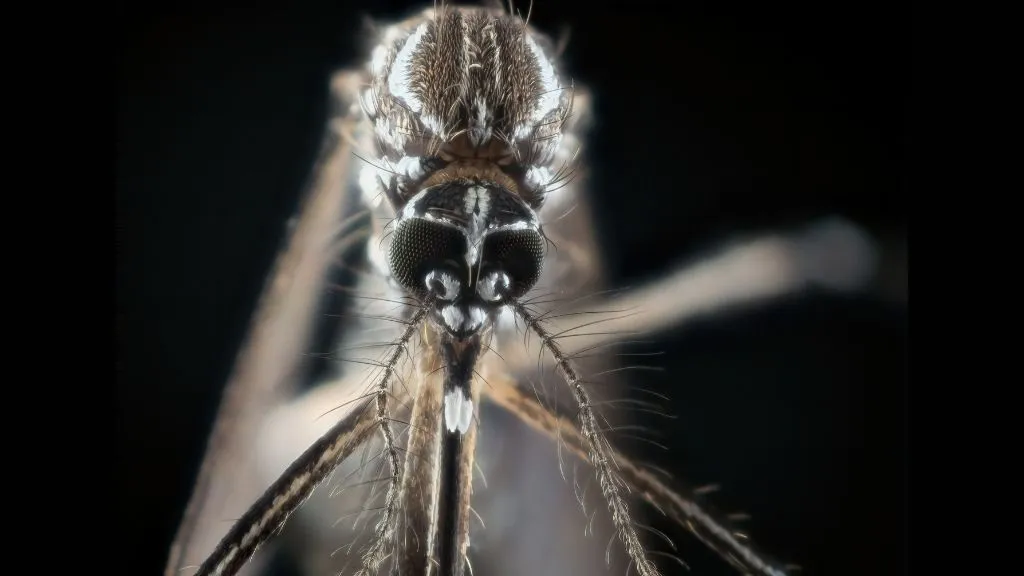
aedes aegypti mosquito

A magnified photo of an Aedes aegypti mosquito (Image credit: Joao Paulo Burini via Getty Images)

It’s the dead of night and you’re tucked away in bed, bundled up to your chin in a pitch dark room — and suddenly you hear the telltale buzzing of a mosquito zoom past your ear. 
Some mosquito species specialize in biting humans, and these tiny blood-suckers excel at tracking us down. The question is, how do mosquitoes hone in on their victims with such precision?
The answer: Mosquitoes can use their sense of smell to pinpoint their next human victim, even if that person’s odor is intermingled with that of nearby animals and the surrounding environment. Humans exude a unique bouquet of odors that’s distinct from the smells exuded by other creatures, and for mosquitoes, this scent acts like a huge homing beacon, drawing them toward their next blood meal.
“There are over 3,000* different species of mosquitoes in total, but only a few mosquitoes specialize in biting humans,” said Zhilei Zhao, a postdoctoral researcher of neurobiology and behavior at Cornell University. Zhao and his colleagues studied one such mosquito species, called Aedes aegypti, which shows an overwhelming preference for biting humans over feeding on other animals.
Aedes aegypti loves humans. They love our odor,” said Matthew DeGennaro, a neurogeneticist and associate professor at Florida International University, who was not involved in the study. Unfortunately, the pests carry a wide array of pathogens and can spread diseases like Zika, dengue, chikungunya and yellow fever to the humans they nip.U
Related: Why do mosquitoes buzz in our ears?

“We have known for a long time that A. aegypti mosquitoes are particularly attracted to … humans compared to other animals. This is part of the reason that they’re such a public health menace,” said Laura B. Duvall, an assistant professor in the Department of Biological Sciences at Columbia University, who was not involved in the study. 
Past studies have suggested that A. aegypti mosquitoes can smell the carbondioxide we exhale and use this chemical cue to find human flesh to bite, according to a 2022 report in the journal Nature Communications. DeGennaro and his colleagues recently discovered that the pests can also smell specific components of human sweat, including lactic acid, he told Live Science in an email. And another study found that the mosquitoes flock towards Brevibacterium linens, a bacterium found on human feet that also gives Limburger cheese its distinctive smell, Live Science previously reported.
But although scientists know that all these chemical cues help A. aegyptimosquitoes target humans, “most of these [cues] are found in both humans and animals,” Duvall told Live Science in an email. Somehow, the mosquitoes still manage to pluck humans out of the line up of potential prey, despite animals emitting similar scent compounds. “We didn’t know how they were able to tell the difference,” Duvall said. 
Zhao’s 2022 study, published May 4 in the journal Nature, uncovered a possible solution to this mystery by zooming in on the mosquitoes’ miniscule brains.
To do this, the researchers first used a gene-editing technique called CRISPR-Cas9 to splice genes for a fluorescent protein into mosquitoes’ DNA; they specifically used female A. aegypti mosquitoes, since the males of the species drink nectar instead of biting humans. Once inserted, the gene directed the mosquitoes’ cells to stick the fluorescent protein into specific nerve cells, or neurons, in the bugs; when these neurons switched on, the protein glowed in response.
“So when neurons are active, the fluorescence increases,” said Zhao, who was a doctoral student at Princeton University at the time the research was conducted. In this way, the team imbued smell-processing centers in the mosquitoes’ brains with these light-up proteins, and they also stuck the proteins into the blood suckers’ scent-detecting organs, such as their antennae and maxillary palps, which are tiny sensory organs that jut out from the bugs’ mouthparts.

An Aedes aegypti mosquito slurps up a blood meal. (Image credit: Joao Paulo Burini via Getty Images)

The team then exposed the mosquitoes to a sampling of scents that they’d collected from different animals, including rats, guinea pigs, quails, sheep, dogs, and of course, humans; each of these sampled scents contained a blend of different compounds let off by the animals. To see which areas of the mosquito brain lit up in response to the different fragrances, the team sliced into the bugs’ puny heads.
Related: Should we kill every mosquito on Earth?
“The brain is super small,” only about 0.01 inches (0.5 millimeters) across, Zhao said. Working under microscopes, the team would peel away the outer cuticle covering the mosquitoes’ heads, carefully exposing the bugs’ fluoresce-riddled brains. The mosquitoes remained alive throughout the delicate procedure. “Your hands need to be steady, otherwise you kind of just destroy the brain,” he said.
One bulbous bundle of nerves, known as a glomerulus, showed a strong reaction to human scents but a weak reaction to animal smells, the team found. They called these nerves the human-sensitive (H) glomerulus. A different glomerulus (labeled A) showed the opposite pattern, reacting strongly to animal but not people scents, and a third glomerulus (labeled B) reacted strongly to all the test odors. To better understand these patterns of activation, the team broke down the animal fragrances into their component compounds, to analyze them individually and in different blends.
They pinpointed two compounds — known as decanal and undecanal — that consistently appeared in large quantities in their human scent samples but in low quantities in the animal samples. These compounds smell sweet and citrusy, similar to an orange peel, and are found in human sebum, an oil produced by glands in the skin.
The newly-identified H glomerulus seemed specifically tuned to these compounds, reacting especially strongly to a synthetic blend of the two. Meanwhile, the B glomerulus only reacted modestly to this scent and the A glomerulus didn’t react at all. The A. aegypti mosquitoes showed a profound attraction towards the blend, even flying toward it in a test conducted in a wind tunnel, the researchers found. This hinted that decanal, undecanal and the H glomerulus activity provoked by the compounds are key to how the mosquitoes track down human hosts.  
“It is amazing to me that there is only one glomerulus whose activation pattern is human specific. I would have thought there are more,” DeGennaro said. However, the H glomerulus likely isn’t working in complete isolation — mosquitoes have other chemical-detecting sensory systems, in addition to the neurons the team analyzed, that also help them home in on hosts, Duvall said. The H glomerulus just seems to be a key driver of A. aegypti mosquitoes’ human-hunting behavior.
The authors didn’t test whether blocking activity in the H glomerulus would shift Aedes aegypti mosquito preference away from humans and toward animals, but this could be an interesting avenue for research. In theory, scientists could develop chemical formulas that tune down the activity of the H glomerulus and thus make mosquito repellants more effective, DeGennaro said. Zhao told Live Science that his colleague is working on developing such compounds now.
Another potential application for the research would be to brew mosquito attractants, or chemicals that could be used as bait to “lure mosquitoes away from humans and into a trap,” Duvall noted. Zhao and his colleagues have patented their decanal-undecanal blend and hope to put it toward such a purpose.
Zhao said he suspects that other mosquito species likely show similar patterns of brain activation in response to human smells, provided that they use humans as their primary host. “It would be interesting to look at other species that have developed human preferences, like Anopheles mosquitoes that can transmit malaria, or species with other host preferences like bird-preferring Culexmosquitoes,” which generally bite animals more often than humans, Duvall said. 

Originally published on Live Science.

Nicoletta Lanese
Nicoletta Lanese 

Nicoletta Lanese is a staff writer for Live Science covering health and medicine, along with an assortment of biology, animal, environment and climate stories. She holds degrees in neuroscience and dance from the University of Florida and a graduate certificate in science communication from the University of California, Santa Cruz. Her work has appeared in The Scientist Magazine, Science News, The San Jose Mercury News and Mongabay, among other outlets.
Note:

  • I noticed that your article references an outdated stat. You mentioned that there are “3,000” species of mosquitoes. Based on our most recent data, these figures have been updated, and According to the latest data, There are 3,500 species of mosquitoes, worldwide.
    As one of the leading organizations in advocacy, It’s the World Animal Foundation’s utmost duty to ensure such statistics are current, not just on our platform but also on other relevant platforms.
    Having recently revised our article with the latest statistics, I wanted to share this so you might consider a similar update.
    For your reference and to verify the latest statistics, kindly visit our page: https://worldanimalfoundation.org/advocate/most-dangerous-animals-in-the-world/.
    To provide your audience with the latest data, we’d be grateful if you could link to our article when making the update.
    Thank you for your attention to this.
    Best Regards.
    Emily Walton,
    Asst. Outreach Manager
    World Animal Foundation

Pfizer Jab In Young People 0% Effective After 5 Months

Authored by Zachary Stieber via The Epoch Times,

The Pfizer COVID-19 vaccine turned negatively effective after five months, according to a new study.

A health care worker fills a syringe with Pfizer’s COVID-19 vaccine in a file image. (Robyn Beck/AFP via Getty Images)

Researchers with the U.S. Centers for Disease Control and Prevention (CDC) analyzed test results from sites across the United States and determined that the vaccine was 60 percent effective two to four weeks after 12- to 15-year-olds got the second of the two-dose primary regimen.

But the effectiveness, measured against symptomatic illness, quickly plummeted, hitting 20 percent around month two and zero around month five.

After that, recipients in the age group were more likely to be infected by COVID-19.

Vaccine effectiveness “was no longer significantly different from 0 during month 3 after the second dose,” the researchers wrote in the study, which was published by the Journal of the American Medical Association.

Pfizer, its partner BioNTech, and the CDC didn’t respond to requests for comment.

The analyzed tests were performed between Dec. 26, 2021, and Feb. 21, 2022. Some 47,700 tests among 12- to 15-year-olds were included, with about half being unvaccinated. The testing data was on the Increasing Community Access to Testing, a program funded by the U.S. Department of Health and Human Services that contracts with pharmacy chains to perform drive-through testing. The testing data was supplemented by information in questionnaires filled out by adults with the adolescents.

Limitations of the study included vaccination being self-reported.

The study was funded by the U.S. government.

The study also found that vaccine effectiveness against symptomatic infection plunged quickly for those 5 to 11 years old, starting at 60 percent but hitting 23 percent just one month later.

One way to combat the negative effectiveness, researchers said, was to get a booster dose.

Of the 906 12- to 15-year-olds who got a third, or booster, dose, the effectiveness was measured at 71 percent two to six weeks after receipt.

Other studies, though, show that the protection from a booster, like that from the primary regimen, quickly wanes.

“Given the well-established pattern of waning mRNA VE after 2 doses and early evidence of waning of booster dose protection in adults, monitoring the duration of protection from booster doses in adolescents will be important,” researchers said.

Both the Pfizer and Moderna vaccines are built on messenger RNA (mRNA) technology. VE refers to vaccine effectiveness.

In another study published by the same journal on May 13, New York researchers reported the gap of infection and hospitalization risk between unvaccinated and vaccinated youth narrowing over time, with vaccinated 5- to 11-year-olds being infected at a rate of 62 per 100,000 and unvaccinated being infected at a rate of 70 per 100,000.

That was an incidence rate ratio of 1.1; the rate ratio for 12- to 17-year-olds was 2.

The protection also waned considerably against hospitalization over time, researchers found.

They said that the findings DO NOT SUPPORT support “efforts to increase vaccination coverage in children and adolescents.

The Art of War – Russian Style

by Pepe Escobar via The Cradle

While we are all familiar with Sun Tzu, the Chinese general, military strategist and philosopher who penned the incomparable Art of War, less known is the Strategikon, the Byzantium equivalent on warfare.

Sixth century Byzantium really needed a manual, threatened as it was from the east, successively by Sassanid Persia, Arabs and Turks, and from the north, by waves of steppe invaders, Huns, Avars, Bulgars, semi-nomadic Turkic Pechenegs and Magyars.

Byzantium could not prevail just by following the classic pattern of Roman Empire raw power – they simply didn’t have the means for it.

So military force needed to be subordinate to diplomacy, a less costly means of avoiding or resolving conflict. And here we can make a fascinating connection with today’s Russia, led by President Vladimir Putin and his diplomacy chief Sergei Lavrov.

But when military means became necessary for Byzantium – as in Russia’s Operation Z – it was preferable to use weaponry to contain or punish adversaries, instead of attacking with full force.

Strategic primacy, for Byzantium, more than diplomatic or military, was a psychological affair. The word Strategia itself is derived from the Greek strategos – which does not mean “General” in military terms, as the west believes, but historically corresponds to a managerial politico-military function.

It all starts with si vis pacem para bellum: “If you want peace prepare for war.” Confrontation must develop simultaneously on multiple levels: grand strategy, military strategy, operative, tactical.

But brilliant tactics, excellent operative intel and even massive victories in a larger war theater cannot compensate for a lethal mistake in terms of grand strategy. Just look at the Nazis in WWII.

Those who built up an empire such as the Romans, or maintained one for centuries like the Byzantines, never succeeded without following this logic.

Those clueless Pentagon and CIA ‘experts’

On Operation Z, the Russians revel in total strategic ambiguity, which has the collective west completely discombobulated. The Pentagon does not have the necessary intellectual firepower to out-smart the Russian General Staff. Only a few outliers understand that this is not a war – since the Ukraine Armed Forces have been irretrievably routed – but actually what Russian military and naval expert Andrei Martyanov calls a “combined arms police operation,” a work-in-progress on demilitarization and denazification.

The US Central Intelligence Agency (CIA) is even more abysmal in terms of getting everything wrong, as recently demonstrated by its chief Avril Haines during her questioning on Capitol Hill. History shows that the CIA strategically blew it all the way from Vietnam to Afghanistan and Iraq. Ukraine is no different.

Ukraine was never about a military win. What is being accomplished is the slow, painful destruction of the European Union (EU) economy, coupled with extraordinary weapons profits for the western military-industrial complex and creeping security rule by those nations’ political elites.

The latter, in turn, have been totally baffled by Russia’s C4ISR (Command, Control, Communications, Computers, Intelligence, Surveillance and Reconnaissance) capabilities, coupled with the stunning inefficiency of their own constellation of Javelins, NLAWs, Stingers and Turkish Bayraktar drones.

This ignorance reaches way beyond tactics and the operational and strategic realm. As Martyanov delightfully points out, they “wouldn’t know what hit them on the modern battlefield with near-peer, forget about peer.”

The caliber of ‘strategic’ advice from the NATO realm was self-evident in the Serpent Island fiasco – a direct order issued by British ‘consultants’ to Ukraine’s President Volodymyr Zelensky. The Commander-in-Chief of the Armed Forces of Ukraine, Valery Zaluzhny, thought the whole thing was suicidal. He was proven right.

All the Russians had to do was launch a few choice anti-ship and surface Onyx missiles from bastions stationed in Crimea on airports south of Odessa. In no time, Serpent Island was back under Russian control – even as high-ranking British and American marine officers ‘disappeared’ during the Ukrainian landing on the island. They were the ‘strategic’ NATO actors on the spot, doling out the lousy advice.

Extra evidence that the Ukraine debacle is predominantly about money laundering – not competent military strategy – is Capitol Hill approving a hefty extra $40 billion in ‘aid’ to Kiev. It’s just another western military-industrial complex bonanza, duly noted by Deputy Chairman of the Security Council of Russia Dmitry Medvedev.

Russian forces, meanwhile, have brought diplomacy to the battlefield, handing over 10 tons of humanitarian assistance to the people of liberated Kherson – with the deputy head of the military-civil administration of the region, Kirill Stremousov, announcing that Kherson wants to become part of the Russian Federation.

In parallel, Georgy Muradov, deputy prime minister of the government of Crimea, has “no doubts that the liberated territories of the south of the former Ukraine will become another region of Russia. This, as we assess from our communication with the inhabitants of the region, is the will of the people themselves, most of whom lived for eight years under conditions of repression and bullying by the Ukronazis.”

Denis Pushilin, the head of the Donetsk People’s Republic, is adamant that the DPR is on the verge of liberating “its territories within constitutional borders,” and then a referendum on joining Russia will take place. When it comes to the Luhansk People’s Republic, the integration process may even come earlier: the only area left to be liberated is the urban region of Lysychansk-Severodonetsk.

The ‘Stalingrad of Donbass’

As much as there’s an energetic debate among the best Russian analysts about the pace of Operation Z, Russian military planning proceeds methodically, as if taking all the time it needs to solidify facts on the ground.

Arguably the best example is the fate of Azov neo-Nazis at Azovstal in Mariupol – the best-equipped unit of the Ukrainians, hands down. In the end, they were totally outmatched by a numerically inferior Russian/Chechen Spetsnaz contingent, and in record time for such a big city.

Another example is the advance on Izyum, in the Kharkov region – a key bridgehead in the frontline. The Russian Ministry of Defense follows the pattern of grinding the enemy while slowly advancing; if they face serious resistance, they stop and smash the Ukrainian defensive lines with non-stop missile and artillery strikes.

Popasnaya in Luhansk, dubbed by many Russian analysts as “Mariupol on steroids”, or “the Stalingrad of Donbass,” is now under total control of the Luhansk People’s Republic, after they managed to breach a de facto fortress with linked underground trenches between most civilian houses. Popasnaya is extremely important strategically, as its capture breaks the first, most powerful line of defense of the Ukrainians in Donbass.

That will probably lead to the next stage, with an offensive on Bakhmut along the H-32 highway. The frontline will be aligned, north to south. Bakhmut will be the key to taking control of the M-03 highway, the main route to Slavyansk from the south.

This is just an illustration of the Russian General Staff applying its trademark, methodical, painstaking strategy, where the main imperative could be defined as a personnel-preserving forward drive. With the added benefit of committing just a fraction of overall Russian firepower.

Russian strategy on the battlefield stands in stark contrast with the EU’s obstinacy in being reduced to the status of an American dog’s lunch, with Brussels leading entire national economies to varying degrees of certified collapse and chaos.

Once again it was up to Russian Foreign Minister Sergei Lavrov – a diplomatic master – to encapsulate it.

Question: “What do you think of Josep Borrell’s (Lavrov’s EU counterpart) initiative to give Ukraine frozen Russian assets as ‘reparations?’ Can we say that the masks have come off and the west is moving on to open robbery?”

Lavrov: “You could say it is theft, which they are not trying to hide … This is becoming a habit for the west … We may soon see the post of the EU chief diplomat abolished because the EU has virtually no foreign policy of its own and acts entirely in solidarity with the approaches imposed by the United States.”

The EU cannot even come up with a strategy to defend its own economic battlefield – just watching as its energy supply is de facto, incrementally turned off by the US. Here we are at the realm where the US tactically excels: economic/financial blackmail. We can’t call these ‘strategic’ moves because they almost always backfire against US hegemonic interests.

Compare it with Russia reaching its biggest surplus in history, with the rise and rise of commodity prices and the upcoming role of the stronger and stronger ruble as a resource-based currency also backed by gold.

Moscow is spending way less than the NATO contingent in the Ukrainian theater. NATO has already wasted $50 billion – and counting – while the Russians spent $4 billion, give or take, and already conquered Mariupol, Berdyansk, Kherson and Melitopol, created a land corridor to Crimea (and secured its water supply), controls the Sea of Azov and its major port city, and liberated strategically vital Volnovakha and Popasnaya in Donbass, as well as Izyum near Kharkov.

That doesn’t even include Russia hurling the entire, collective west into a level of recession not seen since the 1970s.

The Russian strategic victory, as it stands, is military, economic, and may even coalesce geopolitically. Centuries after the Byzantine Strategikon was penned, the Global South would be very much interested in getting acquainted with the 21st century Russian version of the Art of War.

BREAKING! US Admiral Eric Olson – Captured in Azovstal !

US Admiral Eric Olson, a highly decorated Special Operations commander was captured/surrendered in Azovstal, Mariupol. Was this the nature of the call made by Austin to Shoigu on Friday. Surely, yes.

More to come out of the hiding. Canadian general(s), French general(s), Turkish, etc.?!…. à la guerre comme à la guerre.

Is NATO Enlargement a Threat to Russia?

Russia’s restrained reaction to Sweden’s and Finland’s accession to NATO reflects not the absence of symmetrical countermeasures, but an inevitability that has already become accustomed to a few years ago. Looking at how these countries annually increased military spending, approaching the target 2% of GDP (the Finns have already reached it), as well as their participation in major joint exercises, exchanges, military programs of the alliance, no insights have happened now.

The special operation in Ukraine was only a trigger for the accelerated entry of these countries into the alliance, but by no means the very reason. NATO representatives worked on these countries for a long time and tried in every possible way to prove outgoing aggression from Russia. After the start of the NMD, they even sent additional forces to the Baltic region to demonstrate the fight against “Russian aggression”. And all this is happening against the backdrop of joint military exercises between Finland and Sweden.

But even as a member of NATO, the Finns and Swedes want to maintain their military neutrality, at least partially. Sweden has already announced that it is not going to place nuclear weapons and military bases on its territory.

As for Russia, it will have to strengthen the grouping of ground forces and air defense on the border, as well as the fleet in the Gulf of Finland. But there will be no cardinal changes in military policy.