The Defeat of the Ukrainian Elite Military

Updated: By May 20,  2,439 “lions” of Azovstal, the elite forces of Ukraine in Mariupol, have surrendered.

The New York Times, the Washington Post, all the Western mass media is talking about the victory of the Ukrainian army. Zelensky even said that the Azov battalion,  “having completed their combat mission in Mariupol, are now being evacuated in order to save lives”.  

Time Magazine: “Mariupol’s defenders have fully accomplished all missions assigned by the command,” she said. Officials also planned to keep trying to save the fighters who remained inside. Military experts generally put the number of fighters at the plant at anywhere from a few hundred to 1,000. “The work to bring the guys home continues, and it requires delicacy and time,” Zelenskyy said. 

Here is more from the same lunatics:

Ukraine can defeat Russia – NATO. Secretary General believes that Russian military operation in Ukraine is not going the way it was planned.

AP: In Ukraine and internationally, scenario darkens for Russia.

The Spectator (UK): Sergey Radchenko, Why Russia needs to be humiliated in Ukraine. Too little was learnt from the collapse of the Soviet Union.

New York Times: Growing evidence of a military disaster on the Donets pierces a pro-Russian bubble.

The National Interest: Joergen Oerstroem Moeller, The End of Empire: Can Russia Become a True Nation-State? The time has now come to make peace—not from a position of weakness, but a position of strength.

Financial Times: Gideon Rachman, Russia learns a hard lesson about the folly of war. Great powers usually come off worse when they invade smaller countries.

The National Interest: Zalmay Khalilzad, Vladimir Putin’s Pyrrhic Choices in Ukraine. If current trends continue, it seems likely that Putin will soon face three stark choices in Ukraine.

Now, here are the facts on the ground. The elite Ukrainian battalion Azov was defeated and has surrendered. The Western mass media doesn’t show these videos or images. Pathetic. (We’ve spared you the most gruesome images.)

How Do Mosquitoes Sniff Out Humans to Bite?

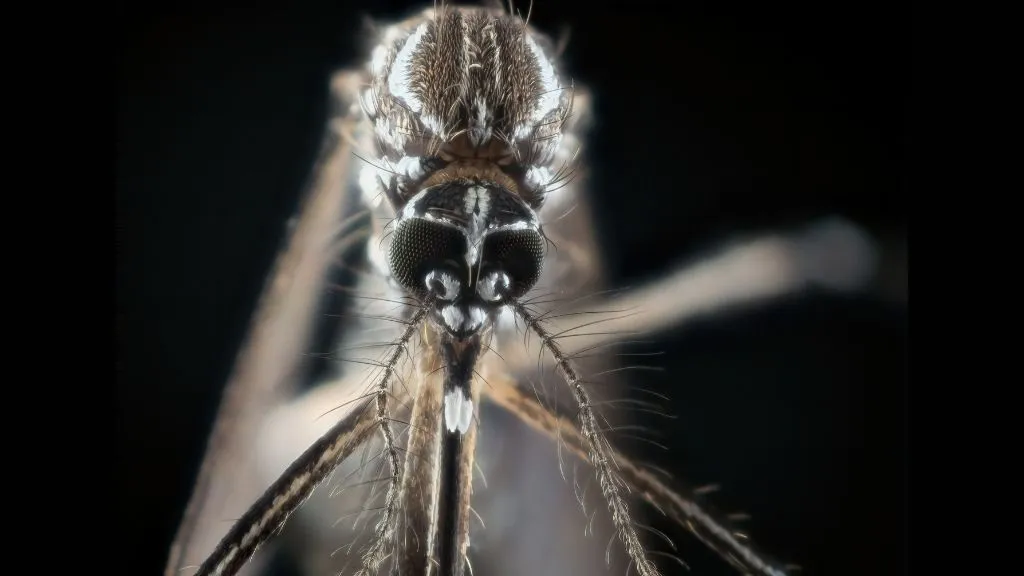
aedes aegypti mosquito

A magnified photo of an Aedes aegypti mosquito (Image credit: Joao Paulo Burini via Getty Images)

It’s the dead of night and you’re tucked away in bed, bundled up to your chin in a pitch dark room — and suddenly you hear the telltale buzzing of a mosquito zoom past your ear. 
Some mosquito species specialize in biting humans, and these tiny blood-suckers excel at tracking us down. The question is, how do mosquitoes hone in on their victims with such precision?
The answer: Mosquitoes can use their sense of smell to pinpoint their next human victim, even if that person’s odor is intermingled with that of nearby animals and the surrounding environment. Humans exude a unique bouquet of odors that’s distinct from the smells exuded by other creatures, and for mosquitoes, this scent acts like a huge homing beacon, drawing them toward their next blood meal.
“There are over 3,000* different species of mosquitoes in total, but only a few mosquitoes specialize in biting humans,” said Zhilei Zhao, a postdoctoral researcher of neurobiology and behavior at Cornell University. Zhao and his colleagues studied one such mosquito species, called Aedes aegypti, which shows an overwhelming preference for biting humans over feeding on other animals.
“Aedes aegypti loves humans. They love our odor,” said Matthew DeGennaro, a neurogeneticist and associate professor at Florida International University, who was not involved in the study. Unfortunately, the pests carry a wide array of pathogens and can spread diseases like Zika, dengue, chikungunya and yellow fever to the humans they nip.U
Related: Why do mosquitoes buzz in our ears?

“We have known for a long time that A. aegypti mosquitoes are particularly attracted to … humans compared to other animals. This is part of the reason that they’re such a public health menace,” said Laura B. Duvall, an assistant professor in the Department of Biological Sciences at Columbia University, who was not involved in the study. 
Past studies have suggested that A. aegypti mosquitoes can smell the carbondioxide we exhale and use this chemical cue to find human flesh to bite, according to a 2022 report in the journal Nature Communications. DeGennaro and his colleagues recently discovered that the pests can also smell specific components of human sweat, including lactic acid, he told Live Science in an email. And another study found that the mosquitoes flock towards Brevibacterium linens, a bacterium found on human feet that also gives Limburger cheese its distinctive smell, Live Science previously reported.
But although scientists know that all these chemical cues help A. aegyptimosquitoes target humans, “most of these [cues] are found in both humans and animals,” Duvall told Live Science in an email. Somehow, the mosquitoes still manage to pluck humans out of the line up of potential prey, despite animals emitting similar scent compounds. “We didn’t know how they were able to tell the difference,” Duvall said. 
Zhao’s 2022 study, published May 4 in the journal Nature, uncovered a possible solution to this mystery by zooming in on the mosquitoes’ miniscule brains.
To do this, the researchers first used a gene-editing technique called CRISPR-Cas9 to splice genes for a fluorescent protein into mosquitoes’ DNA; they specifically used female A. aegypti mosquitoes, since the males of the species drink nectar instead of biting humans. Once inserted, the gene directed the mosquitoes’ cells to stick the fluorescent protein into specific nerve cells, or neurons, in the bugs; when these neurons switched on, the protein glowed in response.
“So when neurons are active, the fluorescence increases,” said Zhao, who was a doctoral student at Princeton University at the time the research was conducted. In this way, the team imbued smell-processing centers in the mosquitoes’ brains with these light-up proteins, and they also stuck the proteins into the blood suckers’ scent-detecting organs, such as their antennae and maxillary palps, which are tiny sensory organs that jut out from the bugs’ mouthparts.

An Aedes aegypti mosquito slurps up a blood meal. (Image credit: Joao Paulo Burini via Getty Images)

The team then exposed the mosquitoes to a sampling of scents that they’d collected from different animals, including rats, guinea pigs, quails, sheep, dogs, and of course, humans; each of these sampled scents contained a blend of different compounds let off by the animals. To see which areas of the mosquito brain lit up in response to the different fragrances, the team sliced into the bugs’ puny heads.
Related: Should we kill every mosquito on Earth?
“The brain is super small,” only about 0.01 inches (0.5 millimeters) across, Zhao said. Working under microscopes, the team would peel away the outer cuticle covering the mosquitoes’ heads, carefully exposing the bugs’ fluoresce-riddled brains. The mosquitoes remained alive throughout the delicate procedure. “Your hands need to be steady, otherwise you kind of just destroy the brain,” he said.
One bulbous bundle of nerves, known as a glomerulus, showed a strong reaction to human scents but a weak reaction to animal smells, the team found. They called these nerves the human-sensitive (H) glomerulus. A different glomerulus (labeled A) showed the opposite pattern, reacting strongly to animal but not people scents, and a third glomerulus (labeled B) reacted strongly to all the test odors. To better understand these patterns of activation, the team broke down the animal fragrances into their component compounds, to analyze them individually and in different blends.
They pinpointed two compounds — known as decanal and undecanal — that consistently appeared in large quantities in their human scent samples but in low quantities in the animal samples. These compounds smell sweet and citrusy, similar to an orange peel, and are found in human sebum, an oil produced by glands in the skin.
The newly-identified H glomerulus seemed specifically tuned to these compounds, reacting especially strongly to a synthetic blend of the two. Meanwhile, the B glomerulus only reacted modestly to this scent and the A glomerulus didn’t react at all. The A. aegypti mosquitoes showed a profound attraction towards the blend, even flying toward it in a test conducted in a wind tunnel, the researchers found. This hinted that decanal, undecanal and the H glomerulus activity provoked by the compounds are key to how the mosquitoes track down human hosts.  
“It is amazing to me that there is only one glomerulus whose activation pattern is human specific. I would have thought there are more,” DeGennaro said. However, the H glomerulus likely isn’t working in complete isolation — mosquitoes have other chemical-detecting sensory systems, in addition to the neurons the team analyzed, that also help them home in on hosts, Duvall said. The H glomerulus just seems to be a key driver of A. aegypti mosquitoes’ human-hunting behavior.
The authors didn’t test whether blocking activity in the H glomerulus would shift Aedes aegypti mosquito preference away from humans and toward animals, but this could be an interesting avenue for research. In theory, scientists could develop chemical formulas that tune down the activity of the H glomerulus and thus make mosquito repellants more effective, DeGennaro said. Zhao told Live Science that his colleague is working on developing such compounds now.
Another potential application for the research would be to brew mosquito attractants, or chemicals that could be used as bait to “lure mosquitoes away from humans and into a trap,” Duvall noted. Zhao and his colleagues have patented their decanal-undecanal blend and hope to put it toward such a purpose.
Zhao said he suspects that other mosquito species likely show similar patterns of brain activation in response to human smells, provided that they use humans as their primary host. “It would be interesting to look at other species that have developed human preferences, like Anopheles mosquitoes that can transmit malaria, or species with other host preferences like bird-preferring Culexmosquitoes,” which generally bite animals more often than humans, Duvall said. 

Originally published on Live Science.

Nicoletta Lanese
Nicoletta Lanese 

Nicoletta Lanese is a staff writer for Live Science covering health and medicine, along with an assortment of biology, animal, environment and climate stories. She holds degrees in neuroscience and dance from the University of Florida and a graduate certificate in science communication from the University of California, Santa Cruz. Her work has appeared in The Scientist Magazine, Science News, The San Jose Mercury News and Mongabay, among other outlets.
Note:

  • I noticed that your article references an outdated stat. You mentioned that there are “3,000” species of mosquitoes. Based on our most recent data, these figures have been updated, and According to the latest data, There are 3,500 species of mosquitoes, worldwide.
    As one of the leading organizations in advocacy, It’s the World Animal Foundation’s utmost duty to ensure such statistics are current, not just on our platform but also on other relevant platforms.
    Having recently revised our article with the latest statistics, I wanted to share this so you might consider a similar update.
    For your reference and to verify the latest statistics, kindly visit our page: https://worldanimalfoundation.org/advocate/most-dangerous-animals-in-the-world/.
    To provide your audience with the latest data, we’d be grateful if you could link to our article when making the update.
    Thank you for your attention to this.
    Best Regards.
    Emily Walton,
    Asst. Outreach Manager
    World Animal Foundation

Pfizer Jab In Young People 0% Effective After 5 Months

Authored by Zachary Stieber via The Epoch Times,

The Pfizer COVID-19 vaccine turned negatively effective after five months, according to a new study.

A health care worker fills a syringe with Pfizer’s COVID-19 vaccine in a file image. (Robyn Beck/AFP via Getty Images)

Researchers with the U.S. Centers for Disease Control and Prevention (CDC) analyzed test results from sites across the United States and determined that the vaccine was 60 percent effective two to four weeks after 12- to 15-year-olds got the second of the two-dose primary regimen.

But the effectiveness, measured against symptomatic illness, quickly plummeted, hitting 20 percent around month two and zero around month five.

After that, recipients in the age group were more likely to be infected by COVID-19.

Vaccine effectiveness “was no longer significantly different from 0 during month 3 after the second dose,” the researchers wrote in the study, which was published by the Journal of the American Medical Association.

Pfizer, its partner BioNTech, and the CDC didn’t respond to requests for comment.

The analyzed tests were performed between Dec. 26, 2021, and Feb. 21, 2022. Some 47,700 tests among 12- to 15-year-olds were included, with about half being unvaccinated. The testing data was on the Increasing Community Access to Testing, a program funded by the U.S. Department of Health and Human Services that contracts with pharmacy chains to perform drive-through testing. The testing data was supplemented by information in questionnaires filled out by adults with the adolescents.

Limitations of the study included vaccination being self-reported.

The study was funded by the U.S. government.

The study also found that vaccine effectiveness against symptomatic infection plunged quickly for those 5 to 11 years old, starting at 60 percent but hitting 23 percent just one month later.

One way to combat the negative effectiveness, researchers said, was to get a booster dose.

Of the 906 12- to 15-year-olds who got a third, or booster, dose, the effectiveness was measured at 71 percent two to six weeks after receipt.

Other studies, though, show that the protection from a booster, like that from the primary regimen, quickly wanes.

“Given the well-established pattern of waning mRNA VE after 2 doses and early evidence of waning of booster dose protection in adults, monitoring the duration of protection from booster doses in adolescents will be important,” researchers said.

Both the Pfizer and Moderna vaccines are built on messenger RNA (mRNA) technology. VE refers to vaccine effectiveness.

In another study published by the same journal on May 13, New York researchers reported the gap of infection and hospitalization risk between unvaccinated and vaccinated youth narrowing over time, with vaccinated 5- to 11-year-olds being infected at a rate of 62 per 100,000 and unvaccinated being infected at a rate of 70 per 100,000.

That was an incidence rate ratio of 1.1; the rate ratio for 12- to 17-year-olds was 2.

The protection also waned considerably against hospitalization over time, researchers found.

They said that the findings DO NOT SUPPORT support “efforts to increase vaccination coverage in children and adolescents.

The Art of War – Russian Style

by Pepe Escobar via The Cradle

While we are all familiar with Sun Tzu, the Chinese general, military strategist and philosopher who penned the incomparable Art of War, less known is the Strategikon, the Byzantium equivalent on warfare.

Sixth century Byzantium really needed a manual, threatened as it was from the east, successively by Sassanid Persia, Arabs and Turks, and from the north, by waves of steppe invaders, Huns, Avars, Bulgars, semi-nomadic Turkic Pechenegs and Magyars.

Byzantium could not prevail just by following the classic pattern of Roman Empire raw power – they simply didn’t have the means for it.

So military force needed to be subordinate to diplomacy, a less costly means of avoiding or resolving conflict. And here we can make a fascinating connection with today’s Russia, led by President Vladimir Putin and his diplomacy chief Sergei Lavrov.

But when military means became necessary for Byzantium – as in Russia’s Operation Z – it was preferable to use weaponry to contain or punish adversaries, instead of attacking with full force.

Strategic primacy, for Byzantium, more than diplomatic or military, was a psychological affair. The word Strategia itself is derived from the Greek strategos – which does not mean “General” in military terms, as the west believes, but historically corresponds to a managerial politico-military function.

It all starts with si vis pacem para bellum: “If you want peace prepare for war.” Confrontation must develop simultaneously on multiple levels: grand strategy, military strategy, operative, tactical.

But brilliant tactics, excellent operative intel and even massive victories in a larger war theater cannot compensate for a lethal mistake in terms of grand strategy. Just look at the Nazis in WWII.

Those who built up an empire such as the Romans, or maintained one for centuries like the Byzantines, never succeeded without following this logic.

Those clueless Pentagon and CIA ‘experts’

On Operation Z, the Russians revel in total strategic ambiguity, which has the collective west completely discombobulated. The Pentagon does not have the necessary intellectual firepower to out-smart the Russian General Staff. Only a few outliers understand that this is not a war – since the Ukraine Armed Forces have been irretrievably routed – but actually what Russian military and naval expert Andrei Martyanov calls a “combined arms police operation,” a work-in-progress on demilitarization and denazification.

The US Central Intelligence Agency (CIA) is even more abysmal in terms of getting everything wrong, as recently demonstrated by its chief Avril Haines during her questioning on Capitol Hill. History shows that the CIA strategically blew it all the way from Vietnam to Afghanistan and Iraq. Ukraine is no different.

Ukraine was never about a military win. What is being accomplished is the slow, painful destruction of the European Union (EU) economy, coupled with extraordinary weapons profits for the western military-industrial complex and creeping security rule by those nations’ political elites.

The latter, in turn, have been totally baffled by Russia’s C4ISR (Command, Control, Communications, Computers, Intelligence, Surveillance and Reconnaissance) capabilities, coupled with the stunning inefficiency of their own constellation of Javelins, NLAWs, Stingers and Turkish Bayraktar drones.

This ignorance reaches way beyond tactics and the operational and strategic realm. As Martyanov delightfully points out, they “wouldn’t know what hit them on the modern battlefield with near-peer, forget about peer.”

The caliber of ‘strategic’ advice from the NATO realm was self-evident in the Serpent Island fiasco – a direct order issued by British ‘consultants’ to Ukraine’s President Volodymyr Zelensky. The Commander-in-Chief of the Armed Forces of Ukraine, Valery Zaluzhny, thought the whole thing was suicidal. He was proven right.

All the Russians had to do was launch a few choice anti-ship and surface Onyx missiles from bastions stationed in Crimea on airports south of Odessa. In no time, Serpent Island was back under Russian control – even as high-ranking British and American marine officers ‘disappeared’ during the Ukrainian landing on the island. They were the ‘strategic’ NATO actors on the spot, doling out the lousy advice.

Extra evidence that the Ukraine debacle is predominantly about money laundering – not competent military strategy – is Capitol Hill approving a hefty extra $40 billion in ‘aid’ to Kiev. It’s just another western military-industrial complex bonanza, duly noted by Deputy Chairman of the Security Council of Russia Dmitry Medvedev.

Russian forces, meanwhile, have brought diplomacy to the battlefield, handing over 10 tons of humanitarian assistance to the people of liberated Kherson – with the deputy head of the military-civil administration of the region, Kirill Stremousov, announcing that Kherson wants to become part of the Russian Federation.

In parallel, Georgy Muradov, deputy prime minister of the government of Crimea, has “no doubts that the liberated territories of the south of the former Ukraine will become another region of Russia. This, as we assess from our communication with the inhabitants of the region, is the will of the people themselves, most of whom lived for eight years under conditions of repression and bullying by the Ukronazis.”

Denis Pushilin, the head of the Donetsk People’s Republic, is adamant that the DPR is on the verge of liberating “its territories within constitutional borders,” and then a referendum on joining Russia will take place. When it comes to the Luhansk People’s Republic, the integration process may even come earlier: the only area left to be liberated is the urban region of Lysychansk-Severodonetsk.

The ‘Stalingrad of Donbass’

As much as there’s an energetic debate among the best Russian analysts about the pace of Operation Z, Russian military planning proceeds methodically, as if taking all the time it needs to solidify facts on the ground.

Arguably the best example is the fate of Azov neo-Nazis at Azovstal in Mariupol – the best-equipped unit of the Ukrainians, hands down. In the end, they were totally outmatched by a numerically inferior Russian/Chechen Spetsnaz contingent, and in record time for such a big city.

Another example is the advance on Izyum, in the Kharkov region – a key bridgehead in the frontline. The Russian Ministry of Defense follows the pattern of grinding the enemy while slowly advancing; if they face serious resistance, they stop and smash the Ukrainian defensive lines with non-stop missile and artillery strikes.

Popasnaya in Luhansk, dubbed by many Russian analysts as “Mariupol on steroids”, or “the Stalingrad of Donbass,” is now under total control of the Luhansk People’s Republic, after they managed to breach a de facto fortress with linked underground trenches between most civilian houses. Popasnaya is extremely important strategically, as its capture breaks the first, most powerful line of defense of the Ukrainians in Donbass.

That will probably lead to the next stage, with an offensive on Bakhmut along the H-32 highway. The frontline will be aligned, north to south. Bakhmut will be the key to taking control of the M-03 highway, the main route to Slavyansk from the south.

This is just an illustration of the Russian General Staff applying its trademark, methodical, painstaking strategy, where the main imperative could be defined as a personnel-preserving forward drive. With the added benefit of committing just a fraction of overall Russian firepower.

Russian strategy on the battlefield stands in stark contrast with the EU’s obstinacy in being reduced to the status of an American dog’s lunch, with Brussels leading entire national economies to varying degrees of certified collapse and chaos.

Once again it was up to Russian Foreign Minister Sergei Lavrov – a diplomatic master – to encapsulate it.

Question: “What do you think of Josep Borrell’s (Lavrov’s EU counterpart) initiative to give Ukraine frozen Russian assets as ‘reparations?’ Can we say that the masks have come off and the west is moving on to open robbery?”

Lavrov: “You could say it is theft, which they are not trying to hide … This is becoming a habit for the west … We may soon see the post of the EU chief diplomat abolished because the EU has virtually no foreign policy of its own and acts entirely in solidarity with the approaches imposed by the United States.”

The EU cannot even come up with a strategy to defend its own economic battlefield – just watching as its energy supply is de facto, incrementally turned off by the US. Here we are at the realm where the US tactically excels: economic/financial blackmail. We can’t call these ‘strategic’ moves because they almost always backfire against US hegemonic interests.

Compare it with Russia reaching its biggest surplus in history, with the rise and rise of commodity prices and the upcoming role of the stronger and stronger ruble as a resource-based currency also backed by gold.

Moscow is spending way less than the NATO contingent in the Ukrainian theater. NATO has already wasted $50 billion – and counting – while the Russians spent $4 billion, give or take, and already conquered Mariupol, Berdyansk, Kherson and Melitopol, created a land corridor to Crimea (and secured its water supply), controls the Sea of Azov and its major port city, and liberated strategically vital Volnovakha and Popasnaya in Donbass, as well as Izyum near Kharkov.

That doesn’t even include Russia hurling the entire, collective west into a level of recession not seen since the 1970s.

The Russian strategic victory, as it stands, is military, economic, and may even coalesce geopolitically. Centuries after the Byzantine Strategikon was penned, the Global South would be very much interested in getting acquainted with the 21st century Russian version of the Art of War.

BREAKING! US Admiral Eric Olson – Captured in Azovstal !

US Admiral Eric Olson, a highly decorated Special Operations commander was captured/surrendered in Azovstal, Mariupol. Was this the nature of the call made by Austin to Shoigu on Friday. Surely, yes.

More to come out of the hiding. Canadian general(s), French general(s), Turkish, etc.?!…. à la guerre comme à la guerre.

Is NATO Enlargement a Threat to Russia?

Russia’s restrained reaction to Sweden’s and Finland’s accession to NATO reflects not the absence of symmetrical countermeasures, but an inevitability that has already become accustomed to a few years ago. Looking at how these countries annually increased military spending, approaching the target 2% of GDP (the Finns have already reached it), as well as their participation in major joint exercises, exchanges, military programs of the alliance, no insights have happened now.

The special operation in Ukraine was only a trigger for the accelerated entry of these countries into the alliance, but by no means the very reason. NATO representatives worked on these countries for a long time and tried in every possible way to prove outgoing aggression from Russia. After the start of the NMD, they even sent additional forces to the Baltic region to demonstrate the fight against “Russian aggression”. And all this is happening against the backdrop of joint military exercises between Finland and Sweden.

But even as a member of NATO, the Finns and Swedes want to maintain their military neutrality, at least partially. Sweden has already announced that it is not going to place nuclear weapons and military bases on its territory.

As for Russia, it will have to strengthen the grouping of ground forces and air defense on the border, as well as the fleet in the Gulf of Finland. But there will be no cardinal changes in military policy.

Ominous SpaceX Future in Cyberspace War

🇺🇸🇺🇦 The American company SpaceX has published an updated map with coverage areas of the Starlink global satellite communications system.

32 countries, mostly European, have been added to the new list. In a number of states, including Latin American, African and Southeast Asia, Starlink will appear by the end of 2022 – the beginning of 2023.

Interesting in this list is the inclusion of the countries of the post-Soviet space, namely Kazakhstan, Kyrgyzstan, Turkmenistan, Uzbekistan, Tajikistan and Armenia, in the category of “expecting in 2023”.

What does it threaten?

During a special military operation, Starlink complexes proved their effectiveness in critical conditions:

▪️ Efforts to destroy cell towers and repeaters on the territory of Ukraine have been leveled.

▪️ In the territories where Starlink is used, Russian TV and radio channels are completely banned from broadcasting. The presentation of information is selective.

▪️ Relatively stable and fast data transfer between units of the Armed Forces of Ukraine via secure channels has been ensured.

Currently, active anti-Russian propaganda is going on in the post-Soviet space, sponsored by the UK and the USA and implemented through a number of NGOs.

Connecting the population of Russia’s allied countries to Starlink will allow you to control the flow of information passing to the consumer, blocking everything except “useful” for the West.

In the future, adding the activities of numerous NGOs, this can lead to an even greater split and subsequent distance from interaction with the Russian Federation.

@rybar

“America First” or Ukraine First?

Aid to Ukraine brings the US Republican Party back to the “America First” slogan that was beloved under Trump.

Until this week, there have been very few congressmen who have spoken out against aid to Ukraine. Now there are more of them. An additional 40 billion dollars and lend-lease – this amount alone is more than the military budget of a country like Italy. Yesterday there was loud news that Senator Rand Paul blocked the passage of the bill on aid and demanded that the procedure and those responsible for controlling expenses be included in it.

A little less than six months are left before the elections to the House of Representatives. Candidates begin to actively explore and fertilize the soil. Of course, they do not offer to surrender Ukraine to Russia – it is unlikely that such proposals will appear among the real contenders for the seats. Still there are several positions.

First, the dispute about the high price and cost control. Secondly, the dispute over who should pay: today Trump said that Europe pays little to Ukraine, although this situation affects it more, he once achieved fair deductions from Europe to NATO. Thirdly, the question of who is fighting with whom: Ukraine against Russia or the United States against Russia through the hands of Ukraine; someone does not want to fight with Russia, someone believes that it is not entirely fair to fight at the hands of Ukrainians. Fourth, the search for the guilty: the Republicans, following Trump, will say that Biden did not prevent the war, provoked it by withdrawing troops from Afghanistan, and so on.

Positions about reducing support for Ukraine will drift towards the America First slogan – it originated during the First World War and was revived by Trump in 2016. By the 2024 elections, America will come under the flag of isolationism – no more Ukraine, its own shirt is closer to the body.

Mongolia, a Biological Warfare Testing Ground against Russia and China

by Vladimir Platov via New Eastern Outlook

It’s clear that the entire West is now deeply compromised in the American imperialist project.


 The results of Russia’s ongoing special operation to denazify and demilitarize Ukraine reveal with each passing day more and more documentary evidence of the criminal activities of the US and its allies in that country. One of its activities, as the information received has shown, is the development and creation by Washington of biological weapons in closed US biolabs in Ukraine, in close cooperation with Britain and Germany.

In particular, in addition to the facts of the joint development of bioweapons by Britain and the US, which have already become internationally known, the involvement of Germany in intensive bioweapons activities in Ukraine, along with the US, has also come to light. Russian Foreign Ministry spokeswoman Maria Zakharova said this, citing documents obtained by the Russian Ministry of Defense during a military special operation to protect Donbass. It has been revealed that the German government was implementing the German Biosecurity Program (GBP) since 2013, including in Ukraine, where the US has set up a network of at least 30 biolabs and where dangerous research has been carried out, among other things. On the German side, practical work in this program is carried out, similarly to the US, by military specialists, in particular from the Institute of Microbiology of the German Armed Forces (Munich), as well as from the Friedrich Loeffler Institute (Greifswald – Riems Island), Bernhard Nocht Institute for Tropical Medicine (Hamburg) and the  Robert Koch Institute (Berlin).
It is quite understandable that it is precisely the fear of more and more evidence of said criminal activity in Russian hands as a result of Moscow’s special operation in Ukraine to denazify it that motivates the current German authorities to show increased willingness, compared to other EU countries, to pump the Kiev authorities with more and more weapons and encourage Kiev to continue its military action against Russia. The same reasons explain the activity of German authorities in recent days in attempting to falsely attribute to Russia alleged plans to use biological and chemical weapons in Ukraine and in maintaining an active phase of information warfare against Moscow.
It is also noteworthy that the current German authorities are actively collaborating with the US in the development of bioweapons not only in Ukraine, but also in Central Asia, clearly becoming Washington’s accomplices in the confrontation with both Russia and China.
A study conducted by journalists from the Russian newspaper Izvestia, including by analyzing open scientific publications, revealed that German military biologists carried out research into vectors of dangerous diseases in Mongolia. In particular, wild birds capable of migrating long distances (usually from north to south and back again, so it is easy to guess the reason for this “interest”). At the end of 2012, they published a study on the presence of Escherichia Coli producing the enzyme extended spectrum beta-lactamase (ESBL) in birds. This study was carried out by employees of the Institute of Microbiology and Epizootics of the Faculty of Veterinary Medicine of the Free University of Berlin, the Institute of Biology at the University of Halle-Wittenberg and the German company Vet Med Labor GmbH (Ludwigsburg).

It is also noteworthy that the current German authorities are actively collaborating with the US in the development of bioweapons not only in Ukraine, but also in Central Asia, clearly becoming Washington’s accomplices in the confrontation with both Russia and China.

The increased interest of Western bioweapons “experts” in Mongolia can be explained quite simply: the Mongols are closer to the Chinese, so the diseases that affect the Mongols are very likely to affect the Chinese as well. Incidentally, it cannot be ruled out that the key to the Asian genome has already been found by the US and its “allies”, since the Stealth-Omicron that has been raging in China lately seems to be mainly designed to attack Asians. And, as is well-known, this round of epidemic started in South Korea, also full of American biolabs and where more than 70 thousand people have died in the last 3 months, which is very impressive for this country.
In Mongolia, which rarely makes the news but shares borders with Russia and China, “experts” from the United States and Germany have been collecting biomaterial samples for years. Of particular interest for military specialists are endemic diseases spread by blood-sucking insects, as well as diseases transmitted from animals to humans.
Some published studies conducted in Mongolia often report on the need for “additional research” on vector-borne and zoonotic diseases in this country, and recommend training for staff of local biological organizations. And it cannot be ruled out that this “necessity” can then be used as a justification for expanding cooperation or building US/NATO special laboratories in Mongolia to deal with dangerous vector-borne and zoonotic diseases.
Given that Mongolia is positioned between the “national adversaries” already designated by Washington and NATO more than once – Russia, China and Iran – this country is identified in Pentagon documents as a very promising destination to cut this geopolitical alliance that is already in the making. In addition, Mongolia has many natural and very dangerous hotbeds of various bacteria and viruses: plague, tularaemia, Crimean-Congo fever, leptospirosis, leishmaniasis, pseudotuberculosis and a dozen others. Moreover, it is already known that German “specialists” in Ukraine have been working together with the Anglo-Saxons on some of these viruses and bacteria, in particular on Crimean-Congo fever, which, incidentally, was in the hands of the notorious Dr. Mengele at Dachau concentration camp.
As for the United States’ military use of bioweapons, it is worth remembering how during the Korean War it used such weapons against North Korean forces on several occasions, in particular porcelain balloon bombs filled with plague-carrying fleas. That’s what they were called – “balloons”, “Ishii bombs”. There have been several serious outbreaks there, resulting in several thousand deaths.
It has already been reported in a number of media outlets that the US, together with its Western European allies, plans to open another biolab in Mongolia. The main customer for biological programs there would presumably be a unit of the US Medical Directorate of the Armed Forces Research Institute of Medical Sciences (USAMD-AFRIMS). The Pentagon plans to set up this biological laboratory at the National Center for Emerging and Zoonotic Infectious Diseases, which is based in Ulaanbaatar and is allegedly planning to “research” such particularly dangerous diseases as plague, cholera, malaria, hepatitis, coronavirus and encephalitis there. At the same time, there have been reports that the US “research” activities would include the collection of biological material from Mongolians in areas that are in close proximity to Russia and China. In doing so, the United States and its NATO allies expect Mongolia to agree to study dangerous pathogens in that country, which are often found in areas bordering Russia and China. In this regard, a major focus of US biolabs in Mongolia could be to study the effects of dangerous viruses on people of Asian origin.


Vladimir Platov, expert on the Middle East, writes often for the online magazine “New Eastern Outlook”.

Alarm About Dwindling Global Energy Capacity

Authored by Bryan Jung via The Epoch Times,

Saudi Arabia and the United Arab Emirates warned earlier this week that their spare energy capacity is decreasing in all energy sectors as key producers reduce investment in fossil fuels, pushing oil, diesel, and natural gas to trade at near-record highs.

Brent oil was trading at around $102 a barrel as they spoke.

“I am a dinosaur, but I have never seen these things,” said Saudi energy minister Prince Abdulaziz bin Salman to Bloomberg on May 10, at an OPEC conference in Abu Dhabi.

The prince was referring to the surge in prices for refined oil products, in particular in the United States, where gas and diesel prices are hitting a record high, causing problems for the Biden administration.

“The world needs to wake up to an existing reality. The world is running out of energy capacity at all levels,” said the Saudi minister.

Suhail al Mazrouei, the UAE’s energy minister, said to Bloomberg at the same conference, that without additional global investment, OPEC+ would not be able to guarantee sufficient supplies of oil for its customers as the world economy fully recovers from the pandemic.

“We’ve been warning about the lack of investment,” said al Mazrouei, and “that lack of investment is catching up with a lot of countries.”

The two ministers also hit back at new U.S. congressional legislation intended to target the oil cartel and regulate energy output, claiming that the bill would bring greater chaos to already strained energy markets.

Of the major producers, Saudi Arabia and the UAE are among the few producers investing in greater output and together, are spending billions of dollars to boost crude capacity by 2 million barrels a day by the end of this decade.

The other producers are struggling with investments, as Western shareholders and governments push for a transition from fossil fuels to “green” energy.

OPEC+ announced a 432,000 barrel-a-day increase for June at its meeting on May 5, but it’s struggling to reach even that monthly target, as many members are producing below their quotas.

The 23-nation energy alliance fell short of its production quotas by 2.59 million barrels per day in April, according to the latest OPEC+ survey by S&P Global Commodity Insights.

The UAE minister still believes that there is no serious market crisis at the moment and that OPEC has little urgency to boost oil production.

However, several key importers disagree, especially the EU, U.S., and Japan, which have been demanding a more rapid increase in output from OPEC+ since last year.

The same nations have at the same time imposed sanctions on Russia a lead OPEC member, after its invasion of Ukraine at the end of February.

The EU has recently announced an even more punitive ban on Russian energy imports this month.

Crude prices have risen more than 35 percent this year to a high of around $105 a barrel since sanctions were placed on Moscow over Ukraine.

The G7 nations have lobbied OPEC+ to punish Russia, but the Saudis and the UAE reiterated that the cartel would not allow geopolitics to affect its decisions.

Al Mazrouei blamed the politicization of the oil market for the latest rise in prices and declared that OPEC+ was unified and that all members have pledged not to hike output on there own.

“We are together,” he said. “Trust me. No one can unilaterally increase production unless they’re intending to break the alliance,” said the UAE minister.

“We are getting a fraction of what the companies and governments are making from those extra taxes,” he said.

The minister said that it was wrong to blame crude oil producers and that high taxes in consuming nations were to blame for skyrocketing fuel prices.

He also told CNBC that the revival of a proposed bill in Washington could push oil prices by as much as 300 percent.

Top OPEC ministers have hit back at new U.S. legislation intended to regulate oil output and that OPEC was being unfairly targeted over the energy crisis, saying that such efforts would bring chaos to energy markets.

A U.S. Senate Committee greenlighted the new bipartisan No Oil Producing and Exporting Cartels (NOPEC) bill on May 5 with a 17-4 majority, the first step towards passage of the decades-old proposal.

It now needs to be passed by the full Senate and the House, before being signed into law by the president.

The proposed bill aims to protect U.S. consumers and businesses over the manipulation of energy prices and would allow the U.S. government to open an antitrust suit against OPEC over its control of the majority of the world’s oil supply and prices.

“If you hinder that system, you need to watch what you’re asking for, because having a chaotic market you would see … a 200 percent or 300 percent increase in the prices that the world cannot handle,” said Al Mazrouei to CNBC at the World Utilities Congress in Abu Dhabi.

“We, OPEC+, cannot compensate for the whole 100 percent of the world requirement,” he said.

“How much we produce, that is our share. And, actually, I would bet that we are doing much more.”

The UAE and Saudi energy ministers issued a joint statement, saying that both OPEC and non-OPEC members should work together to handle the ongoing energy crisis.

“I’m very concerned about the holistic energy system existing today,” said Prince bin Salman, who added that “the world needs to work collectively, responsibly, comprehensively in providing us and salvaging the world economy.”