Category Archives: Military Affairs

Military Confrontation

The NATO Generals Know the War Against Russia is Lost – the Pentagon Fires Smoke to Screen the Retre at

By John Helmer, Moscow
@bears_with

Soldiers lay down smoke on the battlefield to conceal their movements, advancing or retreating, from the troops on the other side.

In the US Army manuals for warfighting with smoke, there are four kinds for the battlefield (lead image) – obscuring smoke which is aimed at blinding the enemy so he can’t see what you have coming for him; screening smoke which is laid down between you and your enemy, so he can’t see what you are doing in your positions; protecting smoke which is aimed at disrupting the laser and other targeting systems of the other side’s artillery and rockets; and marking smoke whose purpose is either to pinpoint targets for air attackers or rear artillery, or identify safety positions on a rapid-movement battlefield.

With the White House in the lead, in the war the NATO allies are fighting against Russia to the last Ukrainian, an entirely new kind of smoke has been used – it’s the blowback smoke which blinds its users. On the Ukrainian battlefield this smokescreen conceals nothing from the Russians. Instead, it is being used to deceive the NATO country media, voters, and parliaments which must agree to subscribe the money to pay the Ukrainians to fight, and supply them with NATO ammunition, weapons, intelligence, and support services, including credits and cash. Vladimir Zelensky, the Ukrainian president best known for career comic turns — the most famous of which was playing a piano with his penis (screened, protected, marked) — is the master of the blowback smoke on the present battlefield.

A day ago, he told the Ukrainian deputy prime minister of Canada, Chrystia Freeland: “we are approaching a moment when relevant actions can gain pace because we are already going through some mines locations and we are demining these areas.” The calculated ambiguities – “moment”, “approaching”, “relevant”, “can”, “pace”, “some” – are the smoke. The blowback was started by Freeland who told Zelensky that how his counteroffensive was going against the Russians is “the question in the minds of everyone here [and] the preoccupation of all of your friends in the world”. Zelensky’s smoke was invited by Freeland to blind the world, especially their friends.

In this week’s War of the Worlds discussion with Swiss Army Colonel Jacques Baud, this tactic is exposed, and in its place evidence revealed of the French and other allied general staffs trying to find their way off the battlefield, as Zelensky forces are destroyed, along with the best of US, French, British and other NATO weapons. The programme was pre-recorded on Thursday.

Less than twenty-four hours later at a virtual session of the Russian Security Council, President Vladimir Putin made an unusual introduction to the closed-door plans of his military, security and intelligence chiefs. “It is clear today,” Putin said, referring to the Americans, French, Germans, and British, “that the Western curators of the Kiev regime are certainly disappointed with the results of the counteroffensive that the current Ukrainian authorities announced in previous months. There are no results, at least for now.”

“The whole world sees that the vaunted Western, supposedly invulnerable, military equipment is on fire, and is often even inferior to some of the Soviet-made weapons in terms of its tactical and technical characteristics.”

Then on the topic of Poland and Galicia, Putin makes the most important statement by a Russian leader in more than a hundred years. Putin warns the Polish government, together with the Lithuanians, not to make a troop move on Galicia’s capital Lvov, as the Germans had done in 1941. He also warns Berlin not to imagine they can recover the old Prussian or the more recent Third Reich sway in those territories.

Between the lines also, Putin issued an invitation to two of the ruling factions in Kiev – the military command and the Lvov Banderites – that they should remove Zelensky quickly, before they lose what will be left of their territory, after the Russian Army goes on the offensive. If they want to keep Galicia, “this, I repeat”, Putin said, “is in the end their business. If they want to relinquish or sell off something in order to pay their bosses, as traitors usually do, that’s their business. We will not interfere in this.”

Putin’s smoke signal carried a subliminal meaning. He didn’t identify the Biden administration. Instead, he implied that Zelensky is the Americans’ underboss; and that if the Ukrainians want to survive the war in which everything made in America is “on fire”, the Ukrainians don’t have long.

The Battle of Odessa has begun, Baud says. But Russian strategy for the major cities remaining east of the Dnieper River which will be Russian at war’s end does not involve city siege or urban fighting, like Mariupol, he adds, citing Robert Mardini, the Swiss director of the International Red Cross.

Russian war correspondents reporting on the opening missile barrages against Odessa last week confirm this targeting. When a grain storage terminal was hit, Boris Rozhin (“Colonel Cassad”) reported “an important detail, despite all the tantrums in Ukraine and [NATO], even according to official Ukrainian data, there are no civilian deaths. Despite the large number of incoming. This indicates the high accuracy of the strikes and once again shows that the Russian Federation does not purposefully strike at the civilian population. Unlike the Ukraine.”

“Map of missile and drone strikes against targets in Odessa as published in Ukraine. Once again, I would like to draw your attention to the fact that with all the wealth of destructive means involved, not a single civilian was killed during the strikes. They operated like clockwork.” https://t.me/boris_rozhin/92539

To understand the impact of the electric war on the Odessans, and the way the Stavka in Moscow is calculating the city will switch sides as soon as the Kiev regime’s control is broken, read this.

From the northern front, where Russian and Belarus forces are creating the concentration, or the smokescreen for potential offensives aimed at Chernigov, Suny, Poltava, and Kiev, comes the news from the new Wagner camp at Tsel, Belarus. An old military base which has been revived, it is about 100 kilometres southeast of Minsk; about 200 kms northwest of Chernigov and the Ukrainian border.

Source: https://www.bbc.com/

Source: https://www.bbc.com/

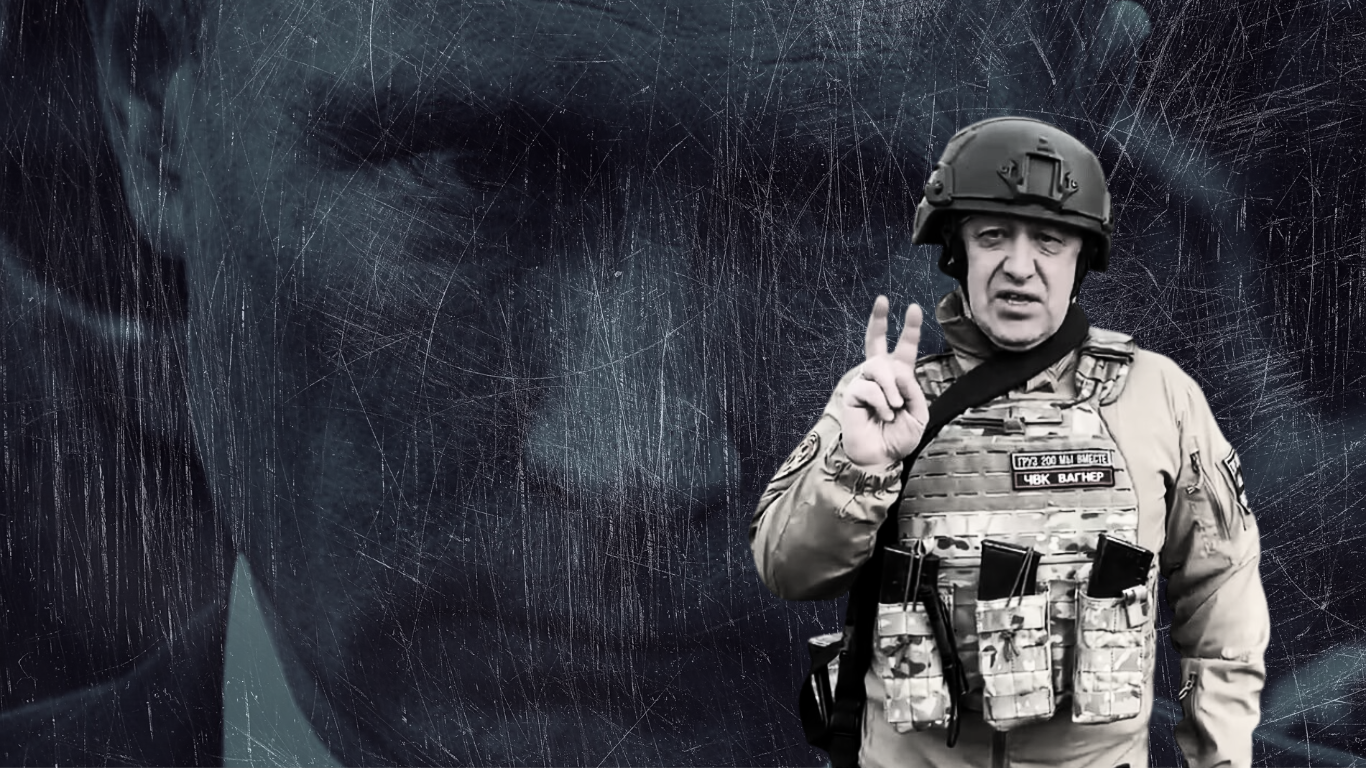
A video clip has been published on the internet in which the soundtrack reveals the unseen Yevgeny Prigozhin speaking to a group of Wagner soldiers; the location appears to be the new Tsel camp. The film also marks the first public appearance, also unseen, of Dmitry Utkin, the military commander of Wagner; from the applause which greeted his remarks, he is a more popular figure among the troops than Prigozhin. Listen to the recording here, If blocked in some areas, this is an English-language version.

“If anyone doesn’t know,” Utkin can be heard introducing himself in Russian. “I am the Wagner. Many thanks to everyone for the work done, thanks to this work, the name PMC [private military company] Wagner has thundered all over the world. This is not the end, but only the beginning! The biggest work in the world that will be done very soon! [In English] Welcome to hell!”

More guarded as double-talk goes was the joint press conference at the Pentagon on July 18. In their remarks Austin and Milley were beating a US retreat.

Left to right: Lieutenant-Colonel Dmitry Utkin; Defense Secretary General Lloyd Austin; JCS Chairman General Mark Milley.

Asked to respond to Ben Wallace, the British defense minister and the first NATO official of active rank to reveal publicly the allies’ doubt towards Zelensky and his regime, Austin was asked by a reporter: “Secretary Austin, you talked about the alliance and the contact group being together. But publicly, there seems to be a bit of fraying. Defense Minister Wallace last week said that he had told his Ukrainian counterparts that, quote/unquote, ‘We are not Amazon, and that they should show us some appreciation.’ Do you agree with the sentiments that Secretary Wallace expressed?”

Austin stumbled in reply: “You know, we’re just off of — just back from the summit in Vilnius, and what I witnessed in Vilnius was indeed unity and cohesion, in every meeting that I sat in. And so I would — it’s the same thing that I witnessed today as I talked to ministers of defense and chiefs of defense. That unity is still there. There’s no question that we have provided Ukraine a lot, we, the international coalition. Ukraine is in a fight, and we have to remember that, when you’re in a fight, you want everything that you can get your hands on. And so that’s to be expected. Ben Wallace and I have worked along with coalition partners over the last year or so on this particular issue, and Ben has done a lot to enable and to help the Ukrainian military. And so he’s been a great partner. But, again, I continue to see unity and cohesion. I continue to hear ministers say that we’re going to support Ukraine for as long as it takes.”

Austin was camouflaging the opposite of what he was trying to say. General Milley then let slip the loss of NATO confidence in the battlefield performance of US and NATO weapons and the Ukrainian army. “So Missy, the — I’d offer two things. One is, you know, what’s the military problem to solve here with the air power? And it’s control of the airspace, and you can do that two ways. You can do that air-to-air or you can do that from the ground to the air. In terms of the most effective and efficient and cost-effective way to do that right now for the Ukrainians is from ground to air through air defense systems, and that’s what they’ve been provided from the beginning if this war ’til now. And that’s important, because what you want to do is protect those assault forces from Russian close-air support and/or attack-helicopter support, and they’ve got air defense systems, the Ru- — Ukrainians do, that can do that.”

Milley almost admitted the truth. It has been the “Ru[ssians]”, not the “Ukrainians” who have demonstrated their superiority in countering and destroying every NATO air defence weapon on the battlefield and around the cities – the most important of which is the US-made Patriot.

“The casualties that the Ukrainians are suffering on this offensive are not so much from Russian airpower; they’re from minefields, minefields that are covered with direct fire from anti-tank hunter-killer teams, that sort of thing. So it’s minefields. So the problem to solve is minefields, not the air piece right this minute. And that’s what the coalition is trying to provide them: additional mine clearing, MICLICs, line charges, Bangalores — that sort of thing, in order to continue to work their way through the minefields.” This was Milley introducing the US decision not to supply F-16 fighter-bombers to the Ukraine.

“So I’m confident that they can do this, and especially if they execute the tactics, techniques and procedures that they’ve been taught, which they are doing, and execute these operations at night, which would deny the Russians the ability to use any of their airpower anyway. So the real problem is the minefields. It’s not right now the airpower. Now, having said that, just do a quick math drill here. Ten F-16s are $2 billion, so the Russians have hundreds of fourth- and fifth-generation airframes. So if they’re going to try to match the Russians one for one, or even, you know, two-to-one, you’re talking about a large number of aircraft. That’s going to take years to train the pilots, years to do the maintenance and sustainment, years to generate that degree of financial support to do that. You’re talking way more billions of dollars than has already been generated.”

“So the key thing is to focus on air defence, focus on the blocking-and-tackling sort of offensive combined arms maneuver, which is artillery, as both long-range and short-range artillery, and then get in your engineers and your mine-breaching equipment. That’s the kind of stuff they need. That’s what they want. That’s what they’re asking for. When I talk to [Ukrainian chief of the general staff, General Valery] Zaluzhny, that’s what he’s asking for, so”.

Milley is also revealing that for the Joint Chiefs of Staff, General Zaluzhny is in line, not President Zelensky.

The new US and NATO decision not to allow the deployment of the F-16s in the war has followed the declaration on July 12 by Russian Foreign Minister Sergei Lavrov that the aircraft is a nuclear-capable attacker and would be treated as such. Milley was ambiguous in his retreat, but three days later, on July 21, the National Security Advisor Jacob Sullivan was categorical. “Ukrainian emphasis on securing supplies of advanced fighter jets for the counteroffensive was misplaced, because strong Ukrainian and Russian air defences had prevented air power from playing a significant role in the conflict, Sullivan said. ‘The view of our military commanders is that the notion that F-16s would play a decisive role in this counteroffensive given that fundamental reality . . . They have a different view than what you have heard from some Ukrainian voices,’ he said.”

The Russian warning to Warsaw on Galicia beat the Poles to the punch, and to the retreat. On Friday afternoon, Warsaw time, the former prime minister Beata Szydlo issued the bluntest statement yet against the Kiev leadership.

Source: https://twitter.com/BeataSzydlo

“The statement of the Prime Minister of Ukraine Denys Shmyhal,” Szydlo said in a tweet published in both Polish and English, “is simply unfair to Poland. After all, such an experienced politician as the head of the Ukrainian government must understand how much Poland has done to help Ukraine, rescuing the country at the moment of greatest danger. Mr. Prime Minister Denys Shmyhal also knows that Ukraine was supposed to transit its agricultural products to third countries through Poland. Meanwhile, Ukrainian producers of grain and other foodstuffs – mark you, large corporations owned by oligarchs, not farmers – decided to seize the opportunity and flood Poland with their products. Such behavior has nothing to do with friendship and cooperation. In fact, the Prime Minister of Ukraine should apologize to Poland for unfair practices, rather than making theses that harm Poland and Polish-Ukrainian relations. For the government of the Law and Justice Party [PiS], the most important thing is the welfare of Polish citizens and the Polish economy, including agriculture. The Polish market must and will be protected from unfair practices”. For more detail on the Polish and European Union embargo on Ukrainian grain exports and the UN scheme for Kiev’s grain profiteering, read this.

The Kremlin posted Putin’s speech to the Poles at 13:05 Moscow, 12:05 Warsaw. The Russian president had spoken several hours before the Polish ex-prime minister and head of the Polish delegation in the European Parliament broke cover. “Have our friends in Warsaw forgotten,” Putin said. “We will remind you.”

“Now the fire of war is being strenuously kindled. In particular, they use for this the ambitions of the leaders of some Eastern European states, who have long turned hatred of Russia, Russophobia, into their main export commodity and into an instrument of their domestic policy. And now they want to warm their hands on the Ukrainian tragedy. In this regard, I cannot but comment on what has just been said: and the reports that have appeared in the press about plans to create a certain so-called Polish-Lithuanian-Ukrainian connection.”

“That is, we are not talking about some gathering of mercenaries — there are enough of them already there, and they are being destroyed – namely, about a regular, assembled, equipped military unit that is planned to be used for operations on the territory of Ukraine. Including for allegedly ensuring the security of modern Western Ukraine, and in fact, to call a spade a spade, for the subsequent occupation of these territories. After all, the prospect is obvious: if Polish units enter, for example, Lvov or other territories of Ukraine, then they will remain there. And they will remain forever.”

Source: https://ipn.gov.pl/
This is the official Polish version of the history, issued three days after the commencement of the Russian Special Military Operation. In Putin’s version, “They [the Zelensky regime] will trade everything: both people and land. Just, by the way, like their ideological predecessors, the Petliurists, who in 1920 concluded so–called secret conventions with Poland, according to which, in exchange for military support, they gave Poland the lands of Galicia and Western Volhynia. Even today, such traitors are ready to open the gates for foreign owners and once again sell Ukraine. As for the Polish leaders, they probably expect to form a coalition under the NATO umbrella and directly intervene in the conflict in Ukraine in order to then tear off a fatter piece for themselves, to regain, as they believe, their historical territories – today's Western Ukraine. It is well known that they also dream of Belarusian lands.”

“By the way,” Putin responded with the Russian history, “there will be nothing new. Let me remind you that after the defeat of Germany and its allies, following the results of the First World War, Polish units occupied Lvov and the adjacent lands that then belonged to Austria-Hungary. Poland, instigated by the West, also took advantage of the tragedy of the Civil War in Russia, annexed some historical Russian provinces. Our country, which was then in a difficult situation, was forced to conclude the Riga Treaty in 1921 and actually recognis the rejection of its territories. And even earlier, in 1920, Poland seized part of Lithuania – the Vilna Region, the territory around modern Vilnius. It seems that together with the Lithuanians they fought against the so-called ‘Russian imperialism’ and as soon as the opportunity turned up, they immediately cut off a piece of land from their neighbours. Poland, as you know, also participated in the partition of Czechoslovakia as a result of the Munich agreement with Hitler in 1938. Completely occupied Tesin Silesia.”

“In the 20-30s of the last century, in the so-called Eastern Districts of Poland – and this is the territory of Western Ukraine, Western Belarus and part of Lithuania – there was a strict polonization and assimilation of local residents; there was a suppression of national cultures, Orthodoxy. I would also like to remind you how such an aggressive policy ended for Poland as a result. It ended with the national tragedy of 1939, when Poland was thrown by the Western Allies to the German war machine and actually lost its independence and statehood, which was restored to a great extent thanks to the Soviet Union. And it was thanks to the Soviet Union, thanks to Stalin’s position, that Poland received significant lands in the West, the lands of Germany. This is exactly the case: the western territories of present–day Poland are Stalin’s gift to the Poles.”

What Stalin gave away, Putin was saying, the Russian Army is prepared to take back – unless Zelensky and the Americans are removed.

Moscow sources express their surprise that the Anglo-American media have failed to report Putin’s remarks and appreciate their significance. “Are the British and Americans all at the beach?” asked one of the sources familiar with the matter. “More likely they realise the game is up for Zelensky. Maybe they are advising him to plan a fake coup to cover his escape, and promising to have the aircraft warmed up in Poland to take him out.”

UAF Counteroffensive Over by the End of August

via NOVOSTI.RU

Commander of the group “Center”: the reserve forces of the Armed Forces of Ukraine for the offensive will last until the end of August
MOSCOW, July 23 — RIA Novosti. Ukrainian units will continue their offensive attempts until the end of August, Lieutenant General Andrey Mordvichev, commander of the Russian group of troops “Center”, said on the air of the TV channel “Russia 1” and on the platform “Look”.

“They have enough time for the offensive until the end of August, they will pull until the end of August. Then there will be a short break. In winter, they will not achieve much of this. Well, by spring, I think it will all be over,” he said.

Mordvichev also commented on the use of NATO ammunition with shrapnel by Ukrainian troops. According to him, the APU began to use such shells more often, but they are not suitable for a counteroffensive. “There is no effect expected for the enemy for such ammunition, I will say. Noisy, dusty. Elementary old grandfather’s methods of fortification save us completely. And armor protection,” the Lieutenant General noted.

According to him, Ukraine has run out of 150-millimeter high-explosive shells, and cluster munitions are less effective for offensive actions in comparison with them.

The Ukrainian counteroffensive in the South Donets, Artemivsk and Zaporozhye directions began on June 4. Kiev has thrown into battle brigades trained by NATO and armed with Western equipment, including the widely advertised Leopard tanks. As Russian Defense Minister Sergei Shoigu stated on July 11, the enemy has not achieved its goals in any direction. At the same time, the losses of the Armed Forces exceeded 26,000 soldiers, 1,244 tanks and thousands of units of other equipment, 21 aircraft and six helicopters.

Against the background of the lack of success of the Ukrainian troops, Western media stated that Kiev had stopped throwing large units and Western equipment into battle. In turn, US Secretary of State Anthony Blinken expressed the opinion that the offensive of the Armed Forces of Ukraine will not be simultaneous, but will go “for a much larger number of months.”

Why Ukraine is Losing the War

Russia is DESTROYING Ukraine On the Battlefield

YouTube: youtu.be/kqQxMkShbeM

Rokfin: rokfin.com/post/142589

Odysee: odysee.com/@richardmedhurst:3/russia-is-destroying-ukraine-on-the:b

#RichardMedhurst

Igor Strelkov on the Crimean Bridge Vulnerability

by Igor Strelkov a.k.a Igor Girkin
(Machine translation)

Another successful attack of the Armed Forces of Ukraine on the Crimean Bridge was inevitable due to two factors.

The first is political, connected with the policy of “agreements” with Ukraine and its allies, which the Kremlin and President Vladimir Putin personally are actively trying to pursue. The “grain deal” allowed Ukraine to launch semi-submersible kamikaze drones from the sea coast near Odessa, as well as from sea cargo ships that provide this deal from the Black Sea. This is also facilitated by a virtual ban on strikes against Ukrainian transport communications, as well as against production facilities involved in the production of Ukrainian Mykola-3 marine drones, as well as against energy facilities that provide these enterprises with energy.

The second factor is military-technical. The Russian army does not have weapons systems capable of successfully combating semi-submersible kamikaze drones. Hundreds of defense industries and research institutes were deliberately destroyed in the largest deindustrialization in world history in 30 years. As a result, thousands of technologies were lost, and in this regard, our lagging behind the advanced countries is already decades.

For a successful fight against semi-submersible kamikaze drones, their timely detection by means of space and aviation technical intelligence is necessary.
But our space grouping is extremely small in number and is not able to fulfill this task.

Our naval aviation is more dead than alive. In order to timely detect these drones and target strike aircraft at them, it is necessary to provide round-the-clock patrolling of the airspace over the Black Sea by anti-submarine patrol aircraft equipped with modern radar equipment for detecting surface and underwater objects. But according to the open press, we have only 22 obsolete Il-38 anti-submarine aircraft and about 20 Tu-142s in the Northern and Pacific fleets. All of them, in terms of their tactical and technical characteristics, do not meet the requirements of today and are significantly inferior to the modern American Boeing P-8 Poseidon anti-submarine aircraft, of which only the United States has 128 and dozens of their allies. In addition, it is not known whether the outdated radar equipment of our Il-38 and Tu-142 will be able to provide effective detection of small-sized semi-submersible kamikaze drones. The supply of new anti-submarine aircraft for the Russian army is not even planned.

Another effective means of detecting semi-submersible kamikaze drones are airborne early warning and control aircraft (AWACS), which easily detect surface sea targets. But even with this we have huge problems. Our nine obsolete A-50 (A-50U) aircraft manufactured in the 1980s, due to their small number, are not capable of meeting all the needs of the Armed Forces, and we do not have the production of new AWACS aircraft.

And without long-range detection of semi-submersible kamikaze drones by technical means, followed by targeting strike aircraft at them, an effective fight against them “on distant frontiers” is impossible.

Only passive means of combat remain – blocking the Kerch Strait with booms, which proved their effectiveness back in the years of the First World War for combating submarines. Judging by today’s attack, they are absent in the Kerch Strait. Why? Is there a large sea traffic from the Black Sea to the Sea of ​​Azov and vice versa in the conditions of war in connection with the entry of the Russian grouping to the coast of the Sea of ​​\u200b\u200bAzov and its transformation into the inland sea of ​​the Russian Federation? Is it really impossible to temporarily completely stop this traffic and thereby secure the Crimean bridge at least from the strikes of semi-submersible kamikaze drones.

I am sure that now among my readers there will be many who will begin to ask the question: “What does Putin have to do with it?”. I hope most people don’t ask this question.

The March on the Kremlin

by Israel Shamir via UNZ

Russian generals are similar to the US generals depicted in Catch-22, the jolly novel by Joseph Heller: quarrelling, arrogant, caring more about their position and reputation than about the war. They too make their fighters fly more missions, perhaps leading their careers to greater glory. Fighters get killed, but who cares? They were greedy, too, and ready to bomb their own airfields if the enemy paid them enough to do it. The Russian general Ivan Popov was very popular with his troops for his panache, but he was forced out by general Gerasimov, the Head of General Staff. Wagner PMC head Eugene Prigozhin, the hero of Bakhmut, needed ammo, but Shoygu from the MoD lusted after another medal (to add to the 60 he has already amassed), and ammo for the Wagner group was not a priority for him. Prigozhin marched with his army to the gates of Moscow to get Putin’s attention, which he got – along with his ammo after some delay. Some journalists accused Prigozhin of mutiny, but instead he was given millions in roubles and dollars, gold and guns that were taken from him in the aftermath of his escapade. Foreign minister Mr Lavrov described the event as peredryaga, meaning trouble, mess, or confusion. General Popov also wants to speak to Putin, to explain himself, but he has no soldiers to march with him.

Both Popov and Prigozhin openly criticized the way Mr Shoygu of the MoD, and General Gerasimov, his head of Staff, are managing the war in Ukraine. But some US officials and the Russian pro-Western opposition preferred to call their criticism a coup d’état. So many people wanted this coup to happen that now it is difficult to claim it was a nothing-burger. Let’s examine in detail what happened between the Russian state, the General Staff, the Ministry of Defence and the proprietor of Wagner PMC, Mr Prigozhin.

Prigozhin is a Russian billionaire and entrepreneur. He did some catering for the Kremlin (a position of great trust), then delivered meals to schools in Moscow and St. Petersburg, and lately has expanded into media operations. He established the so-called Troll Factory: a major source of influence in Russian social media. Before this, it was the Western intelligence services that ruled supreme in Russian social media, be it Facebook, Instagram or VK. Prigozhin’s Trolls were able to quickly counteract the efforts of Western propaganda warriors, and as a result he became close to Putin personally. Around 2015, he moved from commanding internet trolls to commanding real warriors: he established a private military company called Wagner, after the nickname of its co-founder. They fought for Russia in many countries – in Africa, in Syria, in Latin America. At some point, the Russian state turned to them for help. The head of the General Staff, General Gerasimov personally addressed Mr Prigozhin, and asked him to take part in the Ukraine War. Wagner initially participated in the battle for Popasnaya (Lugansk People Republic). Prigozhin was proud to fight a heroic war for the sake of victory and the glory so desired by men, but after more than a year of fighting Prigozhin could see that the Russian army was not in a hurry for victory. The war seemed designed to achieve a stalemate, not conquest.

The real reason behind the delay is that the Ukrainian resistance was a surprise for Russians. Before the war, they thought it would take a few days. That the Ukrainians won’t fight. That the West wouldn’t supply weapons. Even such knowledgeable and wise people as Anatoly Wasserman thought it will be over in a few days; they only wondered would it be a three-day war, or a four-day war? Putin also had unrealistic expectations of a rapid victory. When the Russian generals saw that this was not going to happen, they began to withdraw South, and they deliberately left expensive military equipment behind them as they retreated. I was told by knowledgeable people that this was a US trap set for Putin.

Here the big dichotomy of Russian politics began to play an important part. There are Yeltsinites and Patriots. An experienced man at the top of the administrative ladder, Shoygu was a Yeltsinite. He was close to Yeltsin, managed his re-election in 1996, led the ruling party, and became a minister in 1992 while Yeltsin was the president and Putin was as yet nobody in St Petersburg. Shoygu was a minister for Emergency Situations (EMERCOM), and later he was selected as Minister of Defence. At thirty-two years in the government, he holds an absolute record. Shoygu is a personal friend of President Putin. So is Mr Abramovich, the oligarch. Yet both Shoygu and Abramovich hold very different views from Mr Putin. Putin seeks Russia’s greatness and independence. On the other hand, Yeltsinites like Shoygu would prefer Russia to be defeated and quietly returned to the Neoliberal policies of Yeltsin’s days. Still, Putin is a man of his word and once upon a time he promised Yeltsin that he would safeguard the Yeltsinites, so he could not easily dismiss Shoygu, even if his war management was atrocious. There is a growing opinion that Shoygu assisted the US in their plans to mislead Putin and trap him in the quagmire of the Ukraine. In not entirely unrelated news, Shoygu is considering the run for presidency in 2024 to supplant Putin. Alternatively, the post of President might be occupied by other pro-Western officials: by the Mayor of Moscow Sergey Sobyanin, or similar figures. All the work done by Putin would be undone, and Russia would return to the days of Yeltsin. Prigozhin would prefer Putin do at least one more term, else he himself might compete for the patriotic electorate.

The role of PMC Wagner in this war has changed unexpectedly. Instead of acting as a special group of assault troops to provide victory in the most crucial battles, the Wagner group has more and more become an infantry unit, albeit a special one, but infantry assigned to trench warfare all the same. What was worse– instead of thanking them for this – they were turned into perpetual beggars for armaments.

In the logic of Prigozhin, this is very strange. If you were called up for military service and asked to shoulder the burden, one shouldn’t have to march to beg for ammunition, getting nothing but excuses and squabbles. In this sense, he considered himself deceived. Furthermore – not an unimportant aspect – is the question of profit. After all, the businessman (including the patriotic businessman) still understands that he must earn money to be able to feed his army. And this was the case for the Wagner group: Prigozhin made sure that his soldiers were fed and dressed. In contrast, the soldiers under the MoD were poorly fed and even worse clad. They had to apply to kind-hearted grannies for socks and underwear.

The generals had stolen the army budget and provided for themselves, while soldiers were unkempt and uncared for. Wagner group soldiers were well provided for, except when it came to Russian arms and ammunition. The MoD had no intention of sharing their armaments with the Wagner group, and Prigozhin began to worry that there was nothing left to share: he suspected that the generals had sold their stores of weapons to enlarge their profits. Moreover, Prigozhin understood (after his previous conflicts with MoD and their squabbles over armaments) that no matter what he did, he was going to be framed as the bad guy.

Next came the story of the new contract. The MoD tried to form a PMC of their own, but it was unsuccessful. Then the minister decided to appropriate the Wagner group. Prigozhin’s fighters were told to sign a contract with the MoD. Prigozhin recognized this as a blatant attempt to steal the Wagner group out from under him. His glorious force would be sent to die in the trenches, and Prigozhin would be kicked out. He complained that he did not apply for a position with the MoD. He rightly considered that his own Wagner group was a wonderful unit to be deployed strategically even in the most dangerous places, but it was not to be wasted in trench warfare. He felt he was deceived and misused by Minister of Defence Shoygu and by his Chief of Staff General Gerasimov.

It is not the first time Prigozhin had a problem with Mr Shoygu. In March 2016, in Syria, he was asked to help and take Palmyra, an important position in the desert. He took it, and passed it back to Syrian/Russian forces; but in December 2016, as a result of a surprise attack, a tiny ISIS force recaptured Palmyra, and the garrison placed by the Russian MoD fled the city, leaving huge stockpiles of weapons, ammunition and equipment – and even cooked food in the dining room! Russian forces could not retake Palmyra, and once again they turned to the Wagner group, which was able to recapture the city in March 2017.

Despite the fact that Wagner did not brag about his military successes, Shoygu was embittered with hatred. His opportunity for revenge appeared in less than a year. In February 2018, the Wagner group, with the consent of Assad, decided to “squeeze out” the pro-American Kurds from Conoco’s large refinery near the village of Hasham in the province of Deir ez-Zor. Knowing that the Kurdish defences were covered by the US Air Force, Prigozhin agreed in advance with the Russian command in Syria to have his operation covered by Russian air defence (armed with S-300 and Panzyr) and their full cooperation was promised to him. On the night of February 7-8, 2018, the Wagner group attacked the Conoco plant. The Pentagon immediately contacted Shoygu by direct special line: “Are these yours?” – to which the Americans received the unambiguous answer “No”. After that, the American HIMARS, Apache helicopters and the AC-130 flying battery attacked Prigozhin’s soldiers. The Wagner group suffered the largest (before Ukraine) losses in its history – 334 killed and about 700 wounded. According to Prigozhin, by Shoygu’s order the entire air defence unit was withdrawn and the liaison officers cut off their communication lines with the Wagner group.

Much later, when it was time for the generals to hand out medals to their troops, Prigozhin walked in. He asked Shoygu: “Can I talk with you about the situation that occurred on February 8 under Deir ez-Zor?” Shoygu turned, calmly and arrogantly answered: “Did you want to act a hero? All the heroes are here in this room” – and he waved his hands to indicate all the officers in their splendid formal uniforms – “and you just lost your bearings.”

This is the way Prigozhin told it. According to the Russian side, Shoygu could not hope to defeat the Americans and so he cut a deal with them. In the first Russian reports, all participation of Wagner group was flatly denied. In the Wikipedia, there are a few versions of the encounter. Yet another version is given in the New York Times. In any case, the Wagner group was badly beaten and relations between Prigozhin and Shoygu were permanently spoiled.

After the battle for Bakhmut it became even worse, if that were possible. The MoD did not reply to Wagner group telephone calls, and they were given none of the armaments they needed. Prigozhin worried that if the Wagner group was thrown onto the frontlines, it would now be only for suicide missions, beyond his normal issues with shells, lines of communications and other supply difficulties.

Thus, the rebellion of June 24, 2023 is not a sudden madness of Prigozhin, but only the next stage of an old confrontation. This feud is not just between Shoygu and Prigozhin (although here the personal factor takes precedence), but can be traced much deeper – between the Ministry of Defence and GU (Military Intelligence). Formally the GU is subordinated to the Ministry of Defence, yet practically it has always been and continues to be “a ministry within the ministry”, pursuing its own policies for its own ends.

Prigozhin, from his point of view, has completed his tasks, capitalised on his image, and attacked his adversaries. His was no rebellion; he planned no seizure of power from the start. He proved his loyalty to the president Putin. Though Putin’s enemies have trapped him in the Ukrainian quagmire, Prigozhin proved that his men are still the president’s storm troopers. Prigozhin has consistently completed all the tasks set before him brilliantly. Those on the outside who observe the implementation of Prigozhin’s operations, may (I suppose) differ on the correctness or incorrectness of his actions. I do not have any behind-the-scenes or secret information about the motivations of all the participants in these controversies, but I expect that, in addition to what we observe on television screens and on the Internet, each of these parties has his own private motive. For example, the battlefield tactics of respected generals like Surovikin or Alekseev were naturally constrained by preventive measures to avoid collusions with Prigozhin, and were not intended to influence or injure the Wagner group. Military delays are not always incompetence; often they are tactical moves designed to solidify positions. With any such complex behind-the-scenes gambits, each of the public participants (including those whom we cannot see) have their own reasoning and goals.

What do we mean when we say “Prigozhin went to Belarus”, asked Andrew Pinchuk, the author of Clausewitz and Emptiness, the book approved by Prigozhin? He removed himself from the controversy. Furthermore, he stepped up into international space. Tomorrow, the presidents and leaders of at least two or three dozen different countries – Asian, African, Latin American, Central American and, I think, some European will line up at the ASEAN conference. At the same time, because of all the news swirling around both Prigozhin himself and the agency headed by him, the Wagner group is now the most famous non-state paramilitary brand in the world. And what will it be called next? PMC Wagner? PMC Asia? PMC Global? No, we cannot say that Wagner ceased to exist. I think we need to say that Wagner got a new life.

The story of General Popov is quite different. This brave general has been squashed by the MoD. It was said the reason was his harsh critique of general Shoygu. But there is another plausible explanation. A unit under the command of general Popov succeeded in seizing intact one of Britain’s most prized missiles, called “Storm Shadow”. Instead of being congratulated, the unit was punished, and general Popov promptly retired. It is possible that the MoD intended to use the Storm Shadow in a different way. Popov’s soldiers had delivered it to a scientific institute for studies. Did Shoygu and Gerasimov want to return it to the UK? Or were they just upset that the missile went to the institute connected with Mr Rogozin, former head of Russian Space Research?

It could be; Russia is a new Byzantine Realm, full of complicated intrigues. Meanwhile, the rapidity of the Popov dismissal shows that Yeltsinites are as powerful as ever and President Putin continues to follow their disastrous advice. As he says, he does not want to act under pressure. But even the laughing-stock generals from Catch-22 won the war that is WWII. So will win the Russian generals, or rather Russian soldiers.

Edited by Paul Bennett.

Crimean Bridge Attack – Who Did It?


An interesting observation regarding the Crimean Bridge Attacks…

According to Vladimir Rogov, based on the available information (which is difficult to confirm at this stage), the attack on the Crimean Bridge was reportedly carried out using the British maritime autonomous underwater vehicle REMUS 600, equipped with additional explosives. The REMUS 600 has the capability to operate underwater at depths of up to 600 meters and can be easily controlled using a laptop.

❗️The launch of the REMUS 600 was said to have taken place from a civilian vessel in the Black Sea.

Which is interesting because, as @infantmilitario pointed out, the “Joseph Schulte” container ship arrived in Odessa in October 2022 under the flag of Hong Kong.

It is currently docked at the oil harbor of Odessa, specifically at the 4th loading berth designated for loading gas and oil products.

ℹ️However, reports indicate a lack of infrastructure for container operations in that area.

Given these circumstances, some observers and analysts have speculated that the “Joseph Schulte” container ship may have been utilized as a floating base for drone operations conducted by the Ukrainian Navy and special forces of the Armed Forces of Ukraine and NATO.

Of course, none of this is confirmed, so take it with a grain of salt

https://t.me/DDGeopolitics/73541

Also,

According to the FlightRadar website, at the time of the terrorist attack on the Crimean bridge, two US UAVs and one reconnaissance aircraft monitored the territory of Crimea. 

#source 

To Go Nuclear or Not to Go

by Sergei Markov

There is no split in Russia’s Council on Foreign and Defense Policy. There is indeed an open letter from 21 members of the Council, but they are less than 10% of the members of the SVOP, protesting against the statements of the founder and leader of the SVOP for a long time, Sergey Karaganov.

Sergey Karaganov put forward the thesis (see this: Using its Nuclear Weapons) about the possibility of using tactical nuclear weapons on the territory of a really hostile Poland, and on the non-occupied Ukraine. That is, along the Rzeszow airfield, the real military capital of the Ukrainian Russophobic regime.

This thesis is actively supported by such titans of the Russian propaganda world as Dmitry Kiselev.

And now there are members of the SWOP who want to publicly record their disagreement with the possibility of using tactical nuclear weapons. Almost all of the signatories are people with pro-Western views. It can be assumed that many of them believe that in the current confrontation between Russia and the West, the West is more likely to win. And they present their position in advance. For the future.

Or maybe they just really don’t want a nuclear war. No nuclear war of any kind.

The Strategic Initiative is Gradually Shifting to the Russian Side

Ramzai (Vladislav Shurygin, @Ramzayiegokomanda) writes about the transitional nature of the current situation at the front in the Ukrainian war:

The Ukrainian offensive has obviously run out of steam without achieving any results. Almost forty days of continuous fighting did not lead even to the breakthrough of the screening line.

At the same time, the Ukrainian Armed Forces put into battle up to 60% of the reserves at their disposal, losing up to 25% of their personnel, up to 30% of their tanks, 20% of their artillery, and up to 20% of their armoured vehicles. Further attempts to attack in all strategic directions, using the remaining reserves, have been accepted by the AFU command as futile, both from a military point of view and from a propaganda and political point of view. The success of the “offensive” planned for the NATO summit in Vilnius could not be achieved, and now the AFU command intends to focus on local offensive operations to improve their positions on different parts of the front and to wear down the Russian troops.

The AFU command retains up to eight “fresh” brigades (brigades that have not participated in the offensive) at its disposal. The combat capability of another eight brigades can be restored within three to four weeks. U.S. handlers have already become actively engaged in the process of remedying the losses by sending battalion-sized sets of Bradley IFVs and Stryker APCs, as well as artillery systems and ammunition from their forces in Europe. But it is not possible to recover losses in tanks. There is simply no place to get new tanks now.

The process of reviving the German Leopard 1 tanks from Rheinmetall warehouses is being delayed, and the first batches may arrive in Ukraine no sooner than the second half of August. In addition, the replenishment of the “worn down” brigades with personnel by means of urgent recruitment through yet-another mobilisation does not restore their combat capability. The mobilised men are nearly universally untrained, untested, and have zero motivation. They are joining companies and battalions that have suffered heavy losses, lost a large part of their most experienced fighters and, in turn, are equally demoralised. To consider such brigades “rebuilt” is a big mistake.

As a consequence, the strategic initiative is gradually shifting to the Russian side. The Russian command is increasingly moving from hard defence to offensive actions and has managed to squeeze the AFU in a number of directions.

There is every reason to believe that, after the AFU’s final loss of offensive capabilities, the Russian forces may launch an offensive in several directions. It can hardly be expected to have strategic goals—the Russian Armed Forces still do not have enough forces for that—but we can conduct at least two offensive operations at an army scale.

Seymour Hersh: Prigozhin’s Folly

SEYMOUR HERSH / SUBSTACK — The Biden administration had a glorious few days last weekend. The ongoing disaster in Ukraine slipped from the headlines to be replaced by the “revolt,” as a New York Timesheadline put it, of Yevgeny Prigozhin, chief of the mercenary Wagner Group.

The focus slipped from Ukraine’s failing counter-offensive to Prigozhin’s threat to Putin’s control. As one headline in the Times put it, “Revolt Raises Searing Question: Could Putin Lose Power?” Washington Post columnist David Ignatius posed this assessment: “Putin looked into the abyss Saturday—and blinked.”

Yevgeny-Prigozhin

Secretary of State Antony Blinken—the administration’s go-to wartime flack, who weeks ago spoke proudly of his commitment not to seek a ceasefire in Ukraine—appeared on CBS’s Face the Nation with his own version of reality: “Sixteen months ago, Russian forces were . . . thinking they would erase Ukraine from the map as an independent country,” Blinken said. “Now, over the weekend they’ve had to defend Moscow, Russia’s capital, against mercenaries of Putin’s own making. . . . It was a direct challenge to Putin’s authority. . . . It shows real cracks.”

Blinken, unchallenged by his interviewer, Margaret Brennan, as he knew he would not be—why else would he appear on the show?—went on to suggest that the defection of the crazed Wagner leader would be a boon for Ukraine’s forces, whose slaughter by Russian troops was ongoing as he spoke. “To the extent that it presents a real distraction for Putin, and for Russian authorities, that they have to look at—sort of mind their rear as they’re trying to deal with the counter offensive in Ukraine, I think that creates even greater openings for the Ukrainians to do well on the ground.”

At this point was Blinken speaking for Joe Biden? Are we to understand that this is what the man in charge believes?

We now know that the chronically unstable Prigozhin’s revolt fizzled out within a day, as he fled to Belarus, with a no-prosecution guarantee, and his mercenary army was mingled into the Russian army. There was no march on Moscow, nor was there a significant threat to Putin’s rule.

Pity the Washington columnists and national security correspondents who seem to rely heavily on official backgrounders with White House and State Department officials. Given the published results of such briefings, those officials seem unable to look at the reality of the past few weeks, or the total disaster that has befallen the Ukraine military’s counter-offensive.

So, below is a look at what is really going that was provided to me by a knowledgeable source in the American intelligence community:

“I thought I might clear some of the smoke. First and most importantly, Putin is now in a much stronger position. We realized as early as January of 2023 that a showdown between the generals, backed by Putin, and Prigo, backed by anti-Russian extremists, was inevitable. The age-old conflict between the ‘special’ war fighters and a large, slow, clumsy, unimaginative regular army. The army always wins because they own the peripheral assets that make victory, either offensive or defensive, possible. Most importantly, they control logistics. special forces see themselves as the premier offensive asset. When the overall strategy is offensive, big army tolerates their hubris and public chest thumping because SF are willing to take high risk and pay a high price. Successful offense requires a large expenditure of men and equipment. Successful defense, on the other hand, requires husbanding these assets.

“Wagner members were the spearhead of the original Russian Ukraine offensive. They were the ‘little green men’. When the offensive grew into an all-out attack by the regular army, Wagner continued to assist but reluctantly had to take a back seat in the period of instability and readjustment that followed. Prigo, no shy violet, took the initiative to grow his forces and stabilize his sector.

“The regular army welcomed the help. Prigo and Wagner, as is the wont of special forces, took the limelight and took the credit for stopping the hated Ukrainians. The press gobbled it up. Meanwhile, the big army and Putin slowly changed their strategy from offensive conquest of greater Ukraine to defense of what they already had. Prigo refused to accept the change and continued on the offensive against Bakhmut. Therein lies the rub. Rather than create a public crisis and court-martial the asshole [Prigozhin], Moscow simply withheld the resources and let Prigo use up his manpower and firepower reserves, dooming him to a stand-down. He is, after all, no matter how cunning financially, an ex-hot dog cart owner with no political or military accomplishments.

“What we never heard is three months ago Wagner was cycled out of the Bakhmut front and sent to an abandoned barracks north of Rostov-on-Don [in southern Russia] for demobilization. The heavy equipment was mostly redistributed, and the force was reduced to about 8,000, 2,000 of which left for Rostov escorted by local police.

“Putin fully backed the army who let Prigo make a fool of himself and now disappear into ignominy. All without raising a sweat militarily or causing Putin to face a political standoff with the fundamentalists, who were ardent Prigo admirers. Pretty shrewd.”

There is an enormous gap between the way the professionals in the American intelligence community assess the situation and what the White House and the supine Washington press project to the public by uncritically reproducing the statements of Blinken and his hawkish cohorts.

The current battlefield statistics that were shared with me suggest that the Biden administration’s overall foreign policy may be at risk in Ukraine. They also raise questions about the involvement of the NATO alliance, which has been providing the Ukrainian forces with training and weapons for the current lagging counter-offensive. I learned that in the first two weeks of the operation, the Ukraine military seized only 44 square miles of territory previously held by the Russian army, much of it open land. In contrast, Russia is now in control of 40,000 square miles of Ukrainian territory. I have been told that in the past ten days Ukrainian forces have not fought their way through the Russian defenses in any significant way. They have recovered only two more square miles of Russian-seized territory. At that pace, one informed official said, waggishly, it would take Zelensky’s military 117 years to rid the country. of Russian occupation.

The Washington press in recent days seems to be slowly coming to grips with the enormity of the disaster, but there is no public evidence that President Biden and his senior aides in the White House and State Department aides understand the situation.

Putin now has within his grasp total control, or close to it, of the four Ukrainian oblasts—Donetsk, Kherson, Lubansk, Zaporizhzhia—that he publicly annexed on September 30, 2022, seven months after he began the war. The next step, assuming there is no miracle on the battlefield, will be up to Putin. He could simply stop where he is, and see if the military reality will be accepted by the White House and whether a ceasefire will be sought, with formal end-of-war talks initiated. There will be a presidential election next April in Ukraine, and the Russian leader may stay put and wait for that—if it takes place. President Volodymyr Zelensky of Ukraine has said there will be no elections while the country is under martial law.

Biden’s political problems, in terms of next year’s presidential election, are acute—and obvious. On June 20 the Washington Post published an article based on a Gallup poll under the headline “Biden Shouldn’t Be as Unpopular as Trump—but He Is.” The article accompanying the poll by Perry Bacon, Jr., said that Biden has “almost universal support within his own party, virtually none from the opposition party and terrible numbers among independents.” Biden, like previous Democratic presidents, Bacon wrote, struggles “to connect with younger and less engaged voters.” Bacon had nothing to say about Biden’s support for the Ukraine war because the poll apparently asked no questions about the administration’s foreign policy.

The looming disaster in Ukraine, and its political implications, should be a wake-up call for those Democratic members of Congress who support the president but disagree with his willingness to throw many billions of good money after bad in Ukraine in the hope of a miracle that will not arrive. Democratic support for the war is another example of the party’s growing disengagement from the working class. It’s their children who have been fighting the wars of the recent past and may be fighting in any future war. These voters have turned away in increasing numbers as the Democrats move closer to the intellectual and moneyed classes.

If there is any doubt about the continuing seismic shift in current politics, I recommend a good dose of Thomas Frank, the acclaimed author of the 2004 best-seller What’s the Matter with Kansas? How Conservatives Won the Heart of America, a book that explained why the voters of that state turned away from the Democratic party and voted against their economic interests. Frank did it again in 2016 in his book Listen, Liberal: Or, Whatever Happened to the Party of the People? In an afterword to the paperback edition he depicted how Hillary Clinton and the Democratic Party repeated—make that amplified—the mistakes made in Kansas en route to losing a sure-thing election to Donald Trump.

It may be prudent for Joe Biden to talk straight about the war, and its various problems for America—and to explain why the estimated more than $150 billion that his administration has put up thus far turned out to be a very bad investment.

This article was first self-published by Seymour Hersh on his Substack page.

Seymour M. Hersh publishes at Substack. He has been a staff writer for The New Yorker and The New York Times and established himself at the forefront of investigative journalism in 1970 when he was awarded a Pulitzer Prize (as a freelancer) for his exposé of the massacre in the Vietnamese hamlet of My Lai. Since then he has received the George Polk Award five times, the National Magazine Award for Public Interest twice, the Los Angeles Times Book Prize, the National Book Critics Circle Award, the George Orwell Award, and dozens of other accolades.

This is also explained similarly by The London Review of Books blogger, Greg Afinogev :

“…What is already clear is that the attempted coup is a watershed moment for the Russian far right. It may be tempting to read Prigozhin’s criticisms of the invasion, which echo Western reporting, as a nod to antiwar sentiment. They are not. His actual view of the war is: ‘We didn’t start this special operation, but once the village has ended in a shitshow and you and your neighbours are [killing] each other up, you’d better [kill] them up to the end.’ Thomas Friedman said something similar about Iraq, though he used a more genteel analogy.

“Prigozhin’s admiration for the Ukrainian military, on the other hand, is real enough: he would like Russia to be what he thinks Ukraine has become in the crucible of conflict – a society single-mindedly devoted to mobilising and sacrificing for ultimate victory. The main crime of Russia’s wealthy elites and bureaucrats like Shoigu, in Prigozhin’s eyes, is their failure to take the war seriously enough to achieve this end: instead of the frozen conflict in which the country now finds itself, Russia needs to ‘live for a certain number of years like North Korea, close all the borders, stop pussyfooting around.’ These points are familiar touchstones of the Russian nationalist right, especially its most vocal representative, the video streamer and Telegram poster Igor Girkin, aka Strelkov…”
https://www.lrb.co.uk/blog/2023/june/prigozhin-s-march-on-moscow

Removal of Russian Army’s Deadwood Holdovers?

We try our best not to deal in rumours. However, it is clear that the deal with the Wagner PMC’s insurrectionists could not have been reached without terms. The following are the likely parameters of the new reality that we will see in short order:

—”Wagner PMC” troops will be incorporated into and merged with the Russian Armed Forces.

—Gerasimov and Shoigu will resign, to be replaced by Surovikin (as Chief of Staff) and Dyumin, Governor of Tula, highly respected in the Russian Armed Forces, who played a key role the Crimea operation that led to the Republic’s reunification with Russia (as Minister of Defence).

—Criminal proceedings against Prigozhin will be terminated, and “Wagner PMC” fighters will be given immunity.

The most complete version of the terms of this resolution has been published by @Condottieros, but various details have been reiterated by other sources.