All posts by Algora Blog

The US’ condition of the Economy

Based on the most recent Fed Survey of Consumer Finances (SCF) –

https://www.federalreserve.gov/econres/scfindex.htm

the median household net worth was ~$122,000, and most of that was the equity in the household’s home. Median financial net worth (financial assets like stocks and bonds less liabilities like credit card and auto debt) was minimal.

A 2022 Fed Survey of Economic Well Being of households revealed that almost 40% of Americans would not be able to meet an unexpected expense of $400 from cash/savings on hand, and that figure goes up to ~60% if we make the expense $1,000.

https://www.federalreserve.gov/publications/2022-economic-well-being-of-us-households-in-2021-dealing-with-unexpected-expenses.htm

The majority of people in the US are literally living paycheck to paycheck – with a social safety net (including things like health insurance, cost of prescription medicine) that is much less generous than many part of developed Europe, or even Canada).

Col. Douglas MacGregor: The Implosion of the US, Before Nov. 2024


“I don’t think we’ll ever get to the 2024 election. Things will implode in Washington before that.”

Ukrainians themselves about the Fake War

Is this the fake war discussed here: The Fake War?

Former adviser to Zelensky Oleksii Arestovich – said that the counteroffensive failed through the fault of the United States and NATO: 

You can ask the Americans a question: “Why did you prepare this counteroffensive in such a way and gave so many weapons? Maybe you drove us into negotiations from the very beginning? Imagine if the president or somebody comes out and says it publicly. 

There are a lot of questions for our beloved allies. So many! About gray schemes, about the gray fleet of 300 tankers, which both carried oil and still carry it.About American chips,that go to Russia and parts  go into “calibers” and “Kinzhals”and Russia increased production[of missiles]. Why, if F-16s are in principle given and the pilots began to train, then only in October-November, or, as they say, maybe in 2024, and not give them in May before the counteroffensive, which is decisive? Even if you want to negotiate, then to create negotiations from a position of strength. Why should our infantry pay for this in blood?Why should our citizens pay with blood?Are we defending the collective West here?

50 billion euros of aid to us was blocked. They are killing us with this! These idiots, NATO and Europeans, cannot all together find a short cut for one Orban? Knock him over the head and make him vote normally? What’s going on, comrades?

On a Daily Basis

by Claudiu Secara

It is not so much about worrying about what happens in a distant world, as much as being affected by the consequences that affect all of us on a daily basis.

What the European civilization tried hard to implement was to inculcate a set of moral principles, basic moral imperatives in the people and domesticate the jungle. Don’t do this or that. Don’t lie, don’t cheat, don’t kill, don’t steal. Respect your neighbor, apologize for any mishap, etc. You know.

Many of these were wrapped up in religious worship, but not all, or not always.

But when it is now official teaching from the top leadership that aggression pays off, and substituting reality with daily lies on public television is the main message, this makes it easy to bring out the animal within us and all the subsequent brutish, venal instincts. The sense of taboo is gone, crimes are just a game, keeping one’s word is laughable. We know very well all the litany.

If you look back from Mars, one can see that the old gods of Europe’s Christianity are no longer feared by society – how could anyone believe monstrous superstitions, abominable depictions of hell or heaven on the church walls? In the nineteenth century, there was a great secular movement to educate the peasantry. Our parents’ and their parents’ good manners were a result of that. And we know that they were instilled with secular moral beliefs, a set of ethical principles, and etiquette – what to do and what not to do. – All of that is now gone in the name of the corporate machine.

OK, long sermon. But the net result of this Judaization (another form of Asianization) of our culture is isolation, marginalization, alienation, etc. from the past model of culture. The Chinese model – little ants – is the new model, indeed. When one reads their own best propaganda articles for the Western audience, they still show how opaque they are. No evidence of speaking one’s mind, only Party speak. But that’s not much different from what the woke culture also does, nowadays. Same party/corporate speak.

It is still different in the US society at large. Different even from Russia, which is somewhere in the middle, torn apart by the two opposing trends. To “Westernize” or to “Asianize”, at a time when the West is Asianizing itself? Indeed, there is huge pressure to turn the US itself into the Orwellian, soulless Asian autocratic model.

The Greek invention of searching for the truth and the English focus on facts and empirical observations and respect for the laws of nature, knowledge, science and philosophy of nature – that specific European mindset is overwhelmed these days by the successful machine of the Asians on the meta level. And on the personal level? The loss of any moral compass has turned people into zombies.

And that’s what we are dealing with in our daily life. And it brings unhappiness to all.

Worse still is that the 150 years or so of a self-governing, ethical citizenry is now being canceled across the Western world. Partly, this is a reversion to the darkest days of historical feudalism, partly it is a policy of the dictatorship of a police state, Asian-style: full spectrum obedience by society to the mandarins at the top. Teachers of good manners are replaced by the thought police, batons and tasers, hand-cuffing and prison terms. The wave of repression is growing, it is massive, it targets no specific class. Presidents or former presidents, high-ranking banking executives, intellectuals, thugs and patriots are equally targeted.

Is there an end to it in sight? Not really. Not tomorrow, anyway.

Selfish Geoengineering

The European Commission has warned the bloc’s lawmakers that geoengineering – large-scale technological interventions to mitigate climate change – is fraught with potential “unintended consequences.”

The EU executive body said in a statement released on Wednesday that deploying technologies like solar radiation modification without sufficient understanding of the potential dangers – either for Europeans or populations elsewhere in the world – could be devastating.

“These technologies introduce new risks to people and ecosystems, while they could also increase power imbalances between nations, spark conflicts and raises a myriad of ethical, legal, governance and political issues,” the statement continued, adding that there were no existing rules to ensure such technologies were deployed safely, and that any serious efforts must engage the EU and UN.

“Nobody should be conducting experiments alone with our shared planet,” EU climate policy chief Frans Timmermans told reporters earlier this week, calling for any proposed experiments to be “discussed in the right forum, at the highest international level.”

It’s the latest sign of global concern over climate interventions. Billionaire Microsoft co-founder and Bill Gates attempted to bring his Harvard geoengineering team and their sun-dimming experiment to the north of Sweden in 2021, only to meet with ferocious opposition from the indigenous Saami population and Swedish NGOs, forcing them to return to the US.

Gates has invested heavily in stratospheric aerosol injection, a type of geoengineering in which finely powdered rock is released into the atmosphere to block some of the sun’s rays. Indigenous leaders warned the experiment would create a “moral hazard,” destroying any incentive to reach net zero carbon emissions. Meanwhile, the US – and the rest of the world – would be locked into a geoengineering sequence permanently, as halting the process would result in a sudden rebound of heating.

Critics have also pointed to studies showing that geoengineering setups like Gates’s could destabilize areas of the world in which they are not deployed, worsening the effects of climate change elsewhere by as much as 9%, even as they cooled whichever wealthy country could afford to deploy them.

Mexico banned geoengineering experiments in January after a startup called Make Sunsets tried spraying sulfur particles into the air “without any public engagement or scientific scrutiny,” according to MIT Technology Review. The university condemned that experiment, but has remained bullish on geoengineering, recently suggesting it “might be our final and only option.” The UN released a report in March backing the idea.

The European Commission included its concerns in a document reimagining what it called “the climate and security nexus.” The bloc’s leaders argued that climate change posed a greater threat to national security than ever – not just with biodiversity and resource depletion, but with a surge in migrant populations, more interactions with disease-carrying animals, and potentially runaway technology.

Meanwhile the little bees are at work . . . setting fire to the large swaths of the forests in Canada and northern US.

Toxic air quality alerts stretch from Michigan to Ohio, West Virginia to Pennsvyina to Maryland, Washington, DC, Virginia, Delaware, New Jersey, New York, and into the lower New England area.

Macron on Revolution – Two-Faced

Macron in 2020 to the Lebanese: the revolution does not happen by anyone’s order; people make it (do it).

Macron in 2023 to the French: Protests are not legal and no one has the right to riot against people’s representatives.

There are reports of “Tactical units driving through the streets of Marseille.” 

What the Twitter user is saying above lines up with France 24’s report:

Maybe this is why France needs military vehicles on the streets of Paris. 

Is France a third-world country? 

*   *   * 

Update (1235ET):

President Emmanuel Macron’s government struggles to contain social unrest across the country. 

French interior minister, Gérald Darmanin, said overnight chaos has resulted in 2,000 cars burned, 500 buildings damaged, hundreds of businesses looted, and violent clashes with police. He said over 800 people were arrested, with nearly 250 officers injured. 

Earlier, Macron blamed social media for fueling ‘copycat violence,’ and said state agencies would ask Twitter, Snapchat, and Tiktok to ban the most “sensitive content.” 

Riots and vandalism continued throughout the day Friday. Darmanin said buses and trams would be shut down by 9 pm local time nationwide to suppress the overnight unrest. 

Here are more scenes of the chaos:

*   *   * 

The police killing of a 17-year-old during a traffic stop on Tuesday has unleashed three consecutive days of social unrest across France. 

Bloomberg reports more than 600 people were arrested Thursday night into Friday, with a majority of them between the ages of 14 and 18. 

The Jungle vs the Garden

“Europe is a garden. We have built a garden. And the rest of the world, at least the main part of it, is the jungle. And the jungle could invade the garden,” – Josep Borrell

US Secretary of State Blinken wants to be in the “Room” in a Multipolar World

Quite a change of the rhetoric.

Blinken admits post-Cold War era is over, and hopes the US will still be in the “room” with the big guys, maybe even at the adults’ table  while, nostalgically alluding to a time when the US used to be at “head of the table” (00:20).

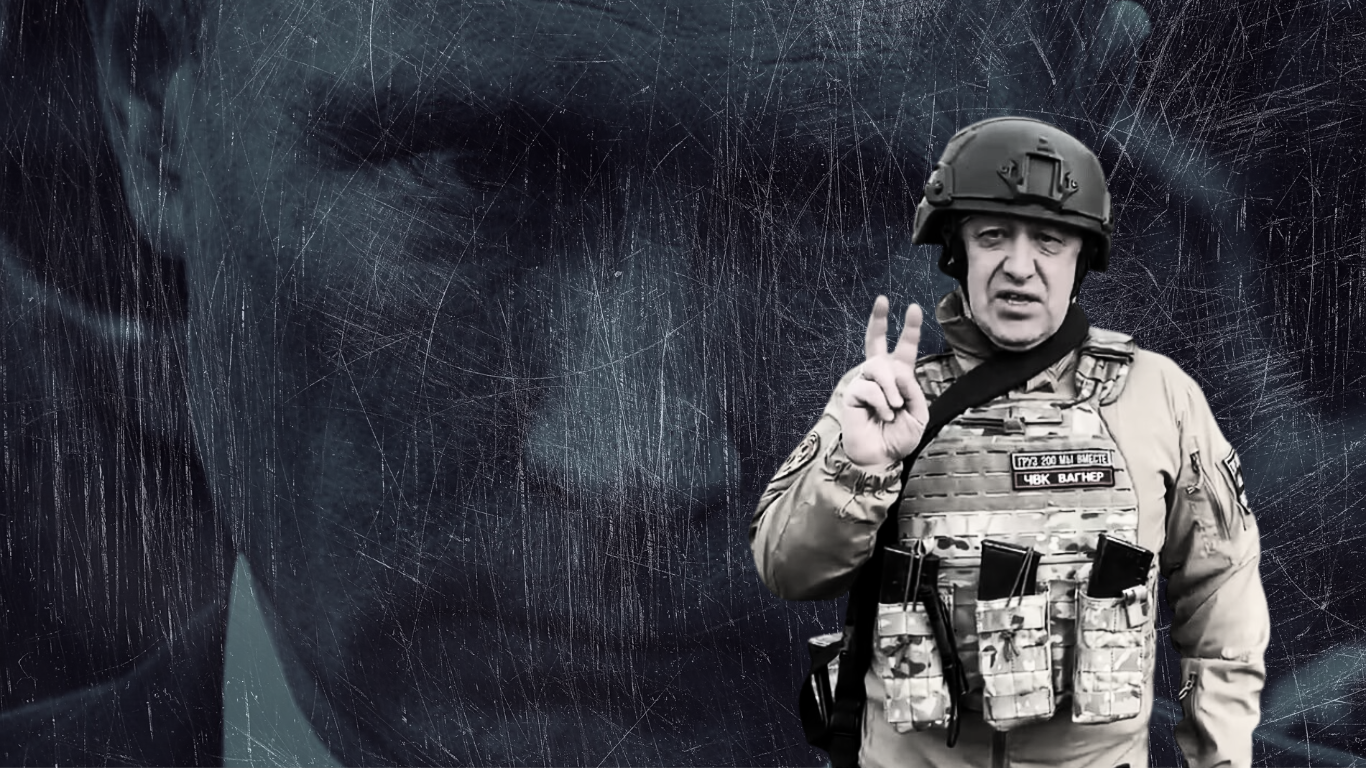
Seymour Hersh: Prigozhin’s Folly

SEYMOUR HERSH / SUBSTACK — The Biden administration had a glorious few days last weekend. The ongoing disaster in Ukraine slipped from the headlines to be replaced by the “revolt,” as a New York Timesheadline put it, of Yevgeny Prigozhin, chief of the mercenary Wagner Group.

The focus slipped from Ukraine’s failing counter-offensive to Prigozhin’s threat to Putin’s control. As one headline in the Times put it, “Revolt Raises Searing Question: Could Putin Lose Power?” Washington Post columnist David Ignatius posed this assessment: “Putin looked into the abyss Saturday—and blinked.”

Yevgeny-Prigozhin

Secretary of State Antony Blinken—the administration’s go-to wartime flack, who weeks ago spoke proudly of his commitment not to seek a ceasefire in Ukraine—appeared on CBS’s Face the Nation with his own version of reality: “Sixteen months ago, Russian forces were . . . thinking they would erase Ukraine from the map as an independent country,” Blinken said. “Now, over the weekend they’ve had to defend Moscow, Russia’s capital, against mercenaries of Putin’s own making. . . . It was a direct challenge to Putin’s authority. . . . It shows real cracks.”

Blinken, unchallenged by his interviewer, Margaret Brennan, as he knew he would not be—why else would he appear on the show?—went on to suggest that the defection of the crazed Wagner leader would be a boon for Ukraine’s forces, whose slaughter by Russian troops was ongoing as he spoke. “To the extent that it presents a real distraction for Putin, and for Russian authorities, that they have to look at—sort of mind their rear as they’re trying to deal with the counter offensive in Ukraine, I think that creates even greater openings for the Ukrainians to do well on the ground.”

At this point was Blinken speaking for Joe Biden? Are we to understand that this is what the man in charge believes?

We now know that the chronically unstable Prigozhin’s revolt fizzled out within a day, as he fled to Belarus, with a no-prosecution guarantee, and his mercenary army was mingled into the Russian army. There was no march on Moscow, nor was there a significant threat to Putin’s rule.

Pity the Washington columnists and national security correspondents who seem to rely heavily on official backgrounders with White House and State Department officials. Given the published results of such briefings, those officials seem unable to look at the reality of the past few weeks, or the total disaster that has befallen the Ukraine military’s counter-offensive.

So, below is a look at what is really going that was provided to me by a knowledgeable source in the American intelligence community:

“I thought I might clear some of the smoke. First and most importantly, Putin is now in a much stronger position. We realized as early as January of 2023 that a showdown between the generals, backed by Putin, and Prigo, backed by anti-Russian extremists, was inevitable. The age-old conflict between the ‘special’ war fighters and a large, slow, clumsy, unimaginative regular army. The army always wins because they own the peripheral assets that make victory, either offensive or defensive, possible. Most importantly, they control logistics. special forces see themselves as the premier offensive asset. When the overall strategy is offensive, big army tolerates their hubris and public chest thumping because SF are willing to take high risk and pay a high price. Successful offense requires a large expenditure of men and equipment. Successful defense, on the other hand, requires husbanding these assets.

“Wagner members were the spearhead of the original Russian Ukraine offensive. They were the ‘little green men’. When the offensive grew into an all-out attack by the regular army, Wagner continued to assist but reluctantly had to take a back seat in the period of instability and readjustment that followed. Prigo, no shy violet, took the initiative to grow his forces and stabilize his sector.

“The regular army welcomed the help. Prigo and Wagner, as is the wont of special forces, took the limelight and took the credit for stopping the hated Ukrainians. The press gobbled it up. Meanwhile, the big army and Putin slowly changed their strategy from offensive conquest of greater Ukraine to defense of what they already had. Prigo refused to accept the change and continued on the offensive against Bakhmut. Therein lies the rub. Rather than create a public crisis and court-martial the asshole [Prigozhin], Moscow simply withheld the resources and let Prigo use up his manpower and firepower reserves, dooming him to a stand-down. He is, after all, no matter how cunning financially, an ex-hot dog cart owner with no political or military accomplishments.

“What we never heard is three months ago Wagner was cycled out of the Bakhmut front and sent to an abandoned barracks north of Rostov-on-Don [in southern Russia] for demobilization. The heavy equipment was mostly redistributed, and the force was reduced to about 8,000, 2,000 of which left for Rostov escorted by local police.

“Putin fully backed the army who let Prigo make a fool of himself and now disappear into ignominy. All without raising a sweat militarily or causing Putin to face a political standoff with the fundamentalists, who were ardent Prigo admirers. Pretty shrewd.”

There is an enormous gap between the way the professionals in the American intelligence community assess the situation and what the White House and the supine Washington press project to the public by uncritically reproducing the statements of Blinken and his hawkish cohorts.

The current battlefield statistics that were shared with me suggest that the Biden administration’s overall foreign policy may be at risk in Ukraine. They also raise questions about the involvement of the NATO alliance, which has been providing the Ukrainian forces with training and weapons for the current lagging counter-offensive. I learned that in the first two weeks of the operation, the Ukraine military seized only 44 square miles of territory previously held by the Russian army, much of it open land. In contrast, Russia is now in control of 40,000 square miles of Ukrainian territory. I have been told that in the past ten days Ukrainian forces have not fought their way through the Russian defenses in any significant way. They have recovered only two more square miles of Russian-seized territory. At that pace, one informed official said, waggishly, it would take Zelensky’s military 117 years to rid the country. of Russian occupation.

The Washington press in recent days seems to be slowly coming to grips with the enormity of the disaster, but there is no public evidence that President Biden and his senior aides in the White House and State Department aides understand the situation.

Putin now has within his grasp total control, or close to it, of the four Ukrainian oblasts—Donetsk, Kherson, Lubansk, Zaporizhzhia—that he publicly annexed on September 30, 2022, seven months after he began the war. The next step, assuming there is no miracle on the battlefield, will be up to Putin. He could simply stop where he is, and see if the military reality will be accepted by the White House and whether a ceasefire will be sought, with formal end-of-war talks initiated. There will be a presidential election next April in Ukraine, and the Russian leader may stay put and wait for that—if it takes place. President Volodymyr Zelensky of Ukraine has said there will be no elections while the country is under martial law.

Biden’s political problems, in terms of next year’s presidential election, are acute—and obvious. On June 20 the Washington Post published an article based on a Gallup poll under the headline “Biden Shouldn’t Be as Unpopular as Trump—but He Is.” The article accompanying the poll by Perry Bacon, Jr., said that Biden has “almost universal support within his own party, virtually none from the opposition party and terrible numbers among independents.” Biden, like previous Democratic presidents, Bacon wrote, struggles “to connect with younger and less engaged voters.” Bacon had nothing to say about Biden’s support for the Ukraine war because the poll apparently asked no questions about the administration’s foreign policy.

The looming disaster in Ukraine, and its political implications, should be a wake-up call for those Democratic members of Congress who support the president but disagree with his willingness to throw many billions of good money after bad in Ukraine in the hope of a miracle that will not arrive. Democratic support for the war is another example of the party’s growing disengagement from the working class. It’s their children who have been fighting the wars of the recent past and may be fighting in any future war. These voters have turned away in increasing numbers as the Democrats move closer to the intellectual and moneyed classes.

If there is any doubt about the continuing seismic shift in current politics, I recommend a good dose of Thomas Frank, the acclaimed author of the 2004 best-seller What’s the Matter with Kansas? How Conservatives Won the Heart of America, a book that explained why the voters of that state turned away from the Democratic party and voted against their economic interests. Frank did it again in 2016 in his book Listen, Liberal: Or, Whatever Happened to the Party of the People? In an afterword to the paperback edition he depicted how Hillary Clinton and the Democratic Party repeated—make that amplified—the mistakes made in Kansas en route to losing a sure-thing election to Donald Trump.

It may be prudent for Joe Biden to talk straight about the war, and its various problems for America—and to explain why the estimated more than $150 billion that his administration has put up thus far turned out to be a very bad investment.

This article was first self-published by Seymour Hersh on his Substack page.

Seymour M. Hersh publishes at Substack. He has been a staff writer for The New Yorker and The New York Times and established himself at the forefront of investigative journalism in 1970 when he was awarded a Pulitzer Prize (as a freelancer) for his exposé of the massacre in the Vietnamese hamlet of My Lai. Since then he has received the George Polk Award five times, the National Magazine Award for Public Interest twice, the Los Angeles Times Book Prize, the National Book Critics Circle Award, the George Orwell Award, and dozens of other accolades.

This is also explained similarly by The London Review of Books blogger, Greg Afinogev :

“…What is already clear is that the attempted coup is a watershed moment for the Russian far right. It may be tempting to read Prigozhin’s criticisms of the invasion, which echo Western reporting, as a nod to antiwar sentiment. They are not. His actual view of the war is: ‘We didn’t start this special operation, but once the village has ended in a shitshow and you and your neighbours are [killing] each other up, you’d better [kill] them up to the end.’ Thomas Friedman said something similar about Iraq, though he used a more genteel analogy.

“Prigozhin’s admiration for the Ukrainian military, on the other hand, is real enough: he would like Russia to be what he thinks Ukraine has become in the crucible of conflict – a society single-mindedly devoted to mobilising and sacrificing for ultimate victory. The main crime of Russia’s wealthy elites and bureaucrats like Shoigu, in Prigozhin’s eyes, is their failure to take the war seriously enough to achieve this end: instead of the frozen conflict in which the country now finds itself, Russia needs to ‘live for a certain number of years like North Korea, close all the borders, stop pussyfooting around.’ These points are familiar touchstones of the Russian nationalist right, especially its most vocal representative, the video streamer and Telegram poster Igor Girkin, aka Strelkov…”
https://www.lrb.co.uk/blog/2023/june/prigozhin-s-march-on-moscow

US Congress Plots to Save Dollar Dominance amid Global De-Dollarization Rebellion

by Ben Norton via Geopolitical Economy

Summary: The US Congress held a hearing titled “Dollar Dominance: Preserving the U.S. Dollar’s Status as the Global Reserve Currency”, as countries around the world join the de-dollarization rebellion against Washington’s “exorbitant privilege”.

Michael Faulkender, who served as Donald Trump’s assistant secretary of the Treasury for economic policy, declared in the session, “As assistant secretary, I told my team that the Treasury secretary proudly states that the dollar will never not be the world’s reserve currency, and our job is to make sure that’s true”.

Also present in the hearing was Daniel McDowell, an associate professor in the political science department at Syracuse University in New York, and author of the book “Bucking the Buck: US Financial Sanctions and the International Backlash Against the Dollar”.

McDowell argued that, by imposing more and more sanctions on countries around the world, Washington is actually weakening the dominance of the dollar.

The US has sanctions on nations that represent more than one-third of the global population and 29% of the world’s GDP.

The two-hour hearing did not address possible plans for the BRICS bloc to create a new international reserve currency. Instead, the participants only spoke of existing national currencies like the Chinese renminbi, Russian ruble, or euro as potential challengers to the US dollar – while ultimately dismissing all of them.

The idea that BRICS could develop an international currency (similar to John Maynard Keynes’ idea of the Bancor) was not even raised as a possibility

The US Congress held a hearing to discuss the growing international movement toward de-dollarization.

Numerous lawmakers expressed concern over what they referred to as mounting “threats” to the “supremacy” of the dollar, warning that China and Russia are challenging the US-dominated international financial system.

Economists invited to testify in the session cautioned that Washington’s aggressive imposition of unilateral sanctions has backfired, weakening dollar dominance by encouraging targeted countries to develop new, alternative financial institutions.

Titled “Dollar Dominance: Preserving the U.S. Dollar’s Status as the Global Reserve Currency”, the June 7 hearing was organized by the House of Representatives Financial Services Committee’s Subcommittee on National Security, Illicit Finance, and International Financial Institutions.

The tone of the two-hour event was deeply schizophrenic. Speakers would triumphantly argue that the dollar remained unbeatable, that its hegemony was inevitable and natural, before a few minutes later complaining that foreign adversaries are conspiring to undermine it.

A neoconservative political economist who spoke, Daniel McDowell, boasted of how the dollar is “the king of all currencies” and “a powerful symbol of American financial royalty”.

Michael Faulkender, who served as Donald Trump’s assistant secretary of the Treasury for economic policy, declared in the session, “As assistant secretary, I told my team that the Treasury secretary proudly states that the dollar will never not be the world’s reserve currency, and our job is to make sure that’s true”.

Representative Monica de la Cruz, a Republican from Texas, said dismissively, “Now this hearing comes at a critical time when some academics and naysayers are spreading theories that de-dollarization has begun, and that the beginning of the end has arrived for the dollar’s dominant role as a global reserve currency”.

The session was chaired by Republican Representative Blaine Luetkemeyer, a hard-line anti-China hawk from Missouri.

“The conversation around the dollar being the reserve currency is becoming louder and louder, as we have more and more I think threats to it”, he cautioned.

Luetkemeyer boasted of the many “economic advantages” that dollar hegemony gives to the United States:

The US dollar has been the preferred global currency since the end of World War Two, providing our nation inherent economic advantages, as well as responsibilities.
Today, an estimated 88% of all currency transactions by value are conducted in US dollars. Among other things, this limits the risk of a balance of payments crisis, which inherently lowers our exchange rate risk.
The dollar’s position also allows the United States and Americans to borrow at rates such as 50 to 60 basis points lower.
Our currency strength not only benefits the United States government, but also helps American consumers by lowering the price of imported goods, resulting in an estimated $25 to $45 billion a year in savings.

The bipartisan hearing was mostly dominated by Republicans, but it also featured some Democrats.

The ranking member of the subcommittee, Ohio Democratic Representative Joyce Beatty, began the session saying, “Thank you to our witnesses for appearing here today to discuss the preservation of the U.S. dollar as the global reserve currency, a topic which we all agree is of the utmost importance”.

Beatty’s rhetoric was less aggressive than that of Luetkemeyer, but she essentially echoed the same talking points, stating:

The dominance and supremacy of the currency affords the United States numerous benefits, from reduced borrowing costs, to increased financial stability, to influence over global financial markets.
It also allows us to leverage economic measures against those that seek to threaten our national security and foreign policy.
Given the undeniable value of the U.S. dollar’s dominance, it is critical that we address the currency and the present threats to it.
As we speak, foreign adversaries like Russia and China are actively working to undermine the U.S. dollar and cripple our global power and influence. We see this in Russia’s rapid accumulation of gold reserves over the last decade, as well as China’s development of non-SWIFT systems to settle and clear transactions involving the RMB.
Furthermore, several other countries are pushing efforts to bypass use of the U.S. dollar and the U.S.-led financial system.
That is why I agree that the subject of this hearing unquestionably deserves our time and attention in Congress and in this subcommittee.

The hearing also featured testimony from Tyler Goodspeed, a right-wing economist who chaired the Council of Economic Advisers when Trump was president.

Goodspeed boasted:

The fact that 90% of all foreign exchange transactions continue to involve the United States dollar, and that global central banks continue to hold almost 60% of their foreign exchange reserves in U.S. dollars, confers net economic benefits on the United States economy.
First, foreign demand for reserves of U.S. dollars raises demand for dollar-denominated securities, in particular United States treasuries. This effectively lowers the cost of borrowing for U.S. households; U.S. companies; and federal, state, and local governments.
It also means that, on average, the United States earns more on its investments in foreign assets than we have to pay on foreign investments in the United States, which allows the United States to import more goods and services than we export.
Second, foreign demand for large reserves of U.S. dollars and dollar-denominated assets raises the value of the dollar, and a stronger dollar benefits U.S. consumers and businesses that are net importers of goods and services from abroad.
Third, large reserve holdings of U.S. currency abroad, in effect, constitutes an interest free loan to the United States worth about $10 to $20 billion per year.
Fourth, the denomination of the majority of international transactions in U.S. dollars likely modestly lowers the exchange rate risks faced by U.S. companies.
Fifth, given the volume of foreign U.S. dollar holdings and dollar-denominated debt, monetary policy actions by foreign central banks generally have a smaller impact on financial conditions in the United States than actions by the United States central bank have on financial conditions in other countries.

Marshall Billingslea, the Treasury’s assistant secretary for terrorist financing under Trump, who also previously worked in the Pentagon, expressed concern that the central banks of China and Russia have been de-dollarizing their foreign-exchange reserves and instead buying other assets, such as gold, which cannot be easily sanctioned:

If we look at what Russia did in the run-up to its further invasion of Ukraine, they began dumping ownership of Treasury bonds in 2018. In that year, they plummeted from $96 billion in holdings down to $15 billion.
And they also started buying large amounts of gold.
China is now … embarking on its own gold-buying spree. I haven’t seen the data for May, but April marked the sixth straight month of Chinese expansion in its gold holdings.
And I’m not sure I believe the official figures. We have to recall that China is the dominant gold-mining player around the world, and half of those gold-mining companies are state-owned.
So the actual size of China’s war chest, when it comes to gold reserves, may be far higher, in fact I suspect inevitably far higher than official numbers suggest.
Last year, China also started dumping its treasuries. 2022 marked the largest or second-largest decrease on record, with a drop of about $174 billion, and China stood at the lowest level since 2010 in terms of its holdings.

In the hearing, Billingslea also warned that, as China stockpiles gold in its foreign-exchange reserves, it could start issuing yuan-denominated contracts that are backed by gold:

The thing I do worry – I come back to this fact that they’ve been buying a lot of gold – is that one of the things that they could do, which would be very concerning, if they wind up having larger reserves of gold than we we believe, is they could start issuing yuan-, or gold-denominated, gold-backed yuan contracts.
That would further their ambition for introducing the yuan onto the world stage.

Also present in the hearing was Daniel McDowell, an associate professor in the political science department at Syracuse University in New York, and author of the book “Bucking the Buck: US Financial Sanctions and the International Backlash Against the Dollar”.

McDowell argued that, by imposing more and more sanctions on countries around the world, Washington is actually weakening the dominance of the dollar.

The US has sanctions on nations that represent more than one-third of the global population and 29% of the world’s GDP.

McDowell explained:

Dollar preeminence and U.S. financial centrality are not without consequence for American coercive power, as you all know.
With little more than the stroke of the president’s pen, or through an act of Congress, the U.S. government can use financial sanctions to impose enormous economic costs on targeted foreign actors, be they individuals, firms, or state institutions, by freezing their dollar assets or cutting them off from access to the banks through which those dollars flow.
As the United States has increased its reliance on financial sanctions as a tool of foreign policy, it has provoked anti-dollar policy responses from our adversaries.
Though such steps are unlikely to upend the dollar’s position as top international currency, including the reserve currency role, over time such policies could diminish the coercive capabilities that the United States derives from dollar centrality.
Over the last two decades, the United States has used the tool of financial sanctions with increasing frequency.
For example, in the year 2000 just four foreign governments were directly targeted under the U.S. Treasury country program, overseen by the Office of Foreign Assets Control, or OFAC. Today, that number is greater than 20; and if we include penalties from secondary sanctions, the list gets even longer.
The more that the United States has reached for financial sanctions, the more it has made adversaries in foreign capitals aware of the strategic vulnerability that stems from dependence on the dollar.
Some governments have responded by implementing anti-dollar policies, measures that are designed to reduce an economy’s reliance on the U.S. currency for investment and cross-border transactions.
While these measures sometimes fail to achieve their goals, others have produced modest levels of de-dollarization.
Notable examples here include Russian steps to cut its dollar reserves and reduce the use of the dollar in trade settlement in the years leading up to its full-scale invasion of Ukraine, or China’s ongoing efforts to build its own international payments network based on the yuan – efforts that have taken on a new sense of urgency as Beijing has become more aware of its own strategic vulnerabilities from dollar dependence.
…
The growing number of states espousing anti-dollar viewpoints and adopting anti-dollar policies does threaten to weaken the future potency of U.S. financial sanctions.
…
Finally, whenever possible, U.S. financial sanctions should be coordinated with our allies in Europe and Asia, who should feel as if they are key stakeholders in the dollar system, and not vassals to it.

Another Republican congresswoman who participated in the hearing, Young Kim from California, complained that China has developed other ways to provide financing to countries that don’t involve the US dollar.

Kim singled out the currency swap-line agreements that the People’s Bank of China has signed with the central banks of other countries, such as Argentina, which is a way for Beijing to give liquidity or credit in yuan, bypassing Washington-dominated financial institutions like the SWIFT inter-bank messaging system:

We should all be troubled by the increase of central bank swap-line agreements deployed by the People’s Bank of China [PBOC].
According to a 2021 PBOC report, it said that it has swap facilities with 40 countries, with a combined capacity of almost 4 trillion yuan, or about $570 billion dollars.
And just a few days ago, Argentina, a country facing a deep currency devaluation and 109% annual inflation, they announced a deal to renew its currency swap line with China and double the amount it can access to nearly $10 billion dollars.
So the PBOC justifies the swap lines as a way to force countries to utilize the yuan as a method of exchange.
So I want to ask you, Mr. Billingslea, instead of liberalizing its capital account and allowing the yuan to be fully convertible into the currency exchange markets, the CCP has opted to increase its bilateral swap-line agreements to further internationalize its currency.
So is there anything that the United States can do to slow down or reduce adaptation of the PBOC’s currency swap lines?

All the participants in the hearing treated the hegemony of the US currency as desirable, arguing it must inevitably be maintained. The five expert witnesses who were invited insisted that there is no short-term threat to dollar dominance.

The two-hour hearing did not address possible plans for the BRICS bloc to create a new international reserve currency. Instead, the participants only spoke of existing national currencies like the Chinese renminbi, Russian ruble, or euro as potential challengers to the US dollar – while ultimately dismissing all of them.

The idea that BRICS could develop an international currency (similar to John Maynard Keynes’ idea of the Bancor) was not even raised as a possibility.